Plastic Pallet Load Capacity: Static, Dynamic & Racking Explained
When selecting pallets, the first thing you should consider is their load capacity. Choosing an under-rated pallet risks structural failure, inventory damage, and workplace accidents. Conversely, over-specifying leads to unnecessary capital expenditure.
This comprehensive guide explains static, dynamic, and racking load capacities, explores the key factors that influence pallet strength, and provides a clear framework to help you select the right plastic pallet for your application.
Static vs. Dynamic vs. Racking Load Capacity
There are 3 weight ratings to evaluate a plastic pallet’s capacity: Static, Dynamic, and Racking. A single pallet can have very different ratings across these 3 metrics.
Static Load Capacity
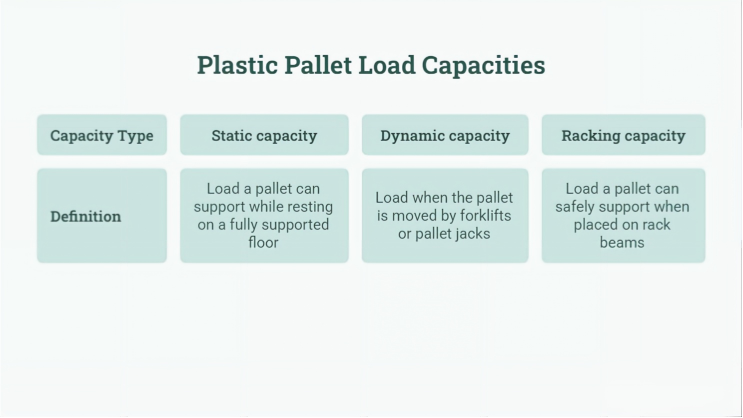
Static load capacity is the maximum weight a pallet can support when it is completely still on a flat, solid floor.
Because the pallet remains stationary on a flat, fully supported surface, static capacity is usually the highest of the three ratings.
When stacking 3 fully loaded pallets on top of each other in a warehouse, the pallet at the very bottom bears the weight of all upper pallets combined in a static state.
Dynamic Load Capacity
Dynamic load capacity is the maximum weight a pallet can carry when being moved by material handling equipment, such as forklifts, electric pallet trucks, or hand pallet jacks.
Movement introduces vibration, shifting centers of gravity, braking forces, and shock loads. As a result, dynamic capacity is usually lower than static capacity.
When a forklift lifts a loaded pallet off the ground and transports it across a warehouse floor, the pallet must support the full payload while enduring movement and vibration without cracking or slipping.
Racking Load Capacity
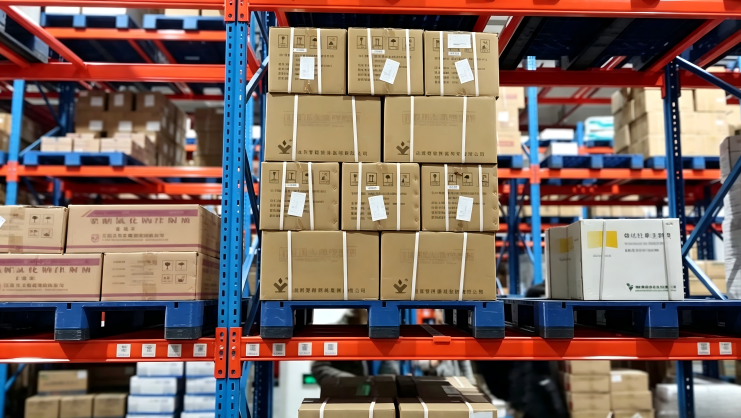
Racking capacity refers to the load a pallet can safely support when placed on rack beams or other limited-support storage systems. The pallet may have limited or no support under the center.
Normally, racking capacity is the lowest of the three ratings. However, it is also one of the most critical ratings for warehouse safety because unsupported spans subject the plastic deck to continuous bending stress.
When storing a pallet on selective rack beams or in high-bay ASRS environments, the pallet bridges the rack beams and must safely hold the load without excessive sag or risk of falling.
How Much Weight Can a Plastic Pallet Hold?
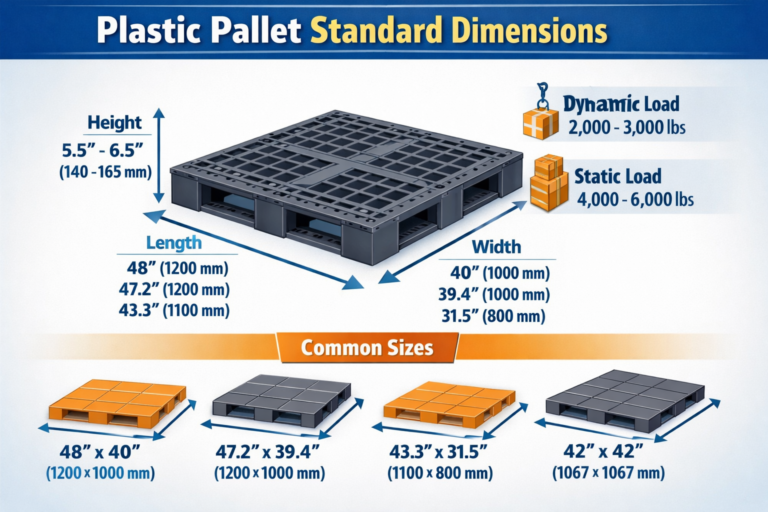
Plastic pallet capacity varies widely by design, size, material, and application. As a general reference, plastic pallets can be divided into light-duty, medium-duty, and heavy-duty categories.
Light Duty
A light-duty plastic pallet typically supports under 500 kg in static load and under 300 kg in dynamic load. It is generally not recommended for racking, although some models may have a limited racking capacity of under 500 kg.
These pallets usually range from 800 × 600 mm to 1200 × 1000 mm and weigh around 3–10 kg. They are lightweight and easy to handle, making them widely used in retail, light manufacturing, food distribution, warehouse picking, and short-distance material handling where load requirements are relatively low.
Medium Duty
Moving up to medium-duty models, these plastic pallets can handle around 1,500–4,000 kg in static load and 800–1,500 kg in dynamic load. Depending on the pallet structure, the racking capacity is typically around 500–1,000 kg.
Common sizes fall between 1000 × 1000 mm and 1200 × 1200 mm, with weights generally around 8–18 kg. With a good balance of load capacity, durability, and cost, medium-duty pallets are a practical choice for food and beverage, pharmaceuticals, chemicals, manufacturing, warehousing, and logistics, particularly for regular forklift handling, stacking, and warehouse circulation.
Heavy Duty
For demanding industrial applications, heavy-duty plastic pallets offer significantly higher load capacity. They can generally support 3,000–6,000+ kg in static load and 1,500–2,500+ kg in dynamic load. Reinforced models may provide 1,000–1,500+ kg in racking capacity.
Heavy-duty pallets are commonly available in sizes from 1100 × 1100 mm to 1400 × 1200 mm or larger, with weights of approximately 15–35+ kg. Built for heavy loads, frequent handling, and long-term reuse, they are well suited to chemical plants, fertilizer and flour mills, feed factories, cement plants, salt production, heavy manufacturing, and high-rack warehousing. For particularly demanding applications, reinforced models can also handle big bags, IBC containers, and other heavy industrial goods.
There is no single global definition of light-, medium-, and heavy-duty plastic pallets. Manufacturers may classify pallets differently based on structure and testing conditions.
Plastic Pallet Load Capacity by Application
Different warehouse and logistics operations place different demands on a pallet. The capacity you need should be based on how the pallet will actually be used.
| Application | Main Capacity to Check |
| Floor storage | Static Capacity |
| Forklift handling | Dynamic Capacity |
| Pallet jack handling | Dynamic Capacity |
| Selective racking | Racking Capacity |
| Drive-in racking | Racking Capacity |
| ASRS | Racking + Dynamic Capacity |
| Export shipping | Dynamic + Static Capacity |
| Heavy bags | Static + Dynamic Capacity |
| IBC containers | Static + Dynamic + Racking Capacity |
For example, a conveyor belt is very common to see in an ASRS warehouse. The pallet on a conveyor belt is moved by the belt, so you should check the pallet’s dynamic capacity.
Besides, the pallet should have suitable specifications to fit the belt and distribute weight evenly. 3-runner design distributes weight across runners, that’s why many ASRS warehouse owners prefer our 1200 x 1000 ISO sized 3-runner pallet for its widely used size and stable dynamic capacity.
What Determines Plastic Pallet Load Capacity?
The structural performance of a plastic pallet depends heavily on its design, material, reinforcement, and operating environment.
Structural Architecture & Footprint
Leg Configuration
Many 9-leg nestable pallets are designed primarily for floor stacking and transport rather than unsupported racking.
Full-perimeter base pallets or 3-skid / 5-skid designs distribute weight across continuous runners and can provide better support for dynamic handling and racking applications.
Deck Top
Solid decks offer even support and distribute point loads better across internal ribs.
Open decks reduce pallet weight while internal ribs provide structural support.
Material Formulation & Additives
Virgin HDPE vs. Recycled Plastic
Virgin HDPE or PP generally offers more consistent material properties, which can be important for demanding impact and load-bearing applications.
Recycled resins lower cost but may reduce impact tolerance under dynamic stresses.
The two materials can also be mixed in a certain ratio to achieve a balance between capacity and cost.
Steel Reinforcement (Steel Bars)
For high-capacity racking applications, such as 1,200 kg to 1,500 kg on open rack beams, plastic alone may flex over long periods.
Most plastic pallets can be reinforced with internal steel bars within the deck and runners.
Steel reinforcement can improve stiffness and reduce deflection while retaining many of the handling and hygiene benefits of plastic.
Glass Fiber (GF)
Glass fiber can be used in some specialty plastic pallet designs to improve stiffness, strength, and temperature resistance.
Why Load Capacity Matters: Risks of Miscalculating Load Capacity
Failing to properly evaluate pallet capacity introduces serious operational risks to any supply chain.
Structural Creep & Deflection
Under continuous racking loads near or above maximum limits, plastic undergoes long-term structural deformation. Deflected pallets can interfere with automated guided vehicle (AGV) systems or fail to trigger sensor beams in automated high-bay warehouses.
Product Loss & Contamination
A collapsing pallet deck can damage high-value cargo below it, causing product leaks, operational downtime, and cleanup costs.
Workplace Health & Safety Hazards
Pallet collapse inside high-level storage racks presents a direct drop risk to floor operators and forklift drivers.
Plastic Pallet Load Capacity Standards
ISO 8611:2025
ISO 8611 stipulates different tests for different handling conditions, including racking, forklift handling, stacking, conveyor support, and special lifting applications.
It defines the safety factor as the ratio of ultimate load to nominal load, with a minimum ratio of 2.0. For example, if a plastic pallet breaks or collapses under a test load of 4,000 kg, its Ultimate Failure Load is 4,000 kg. With a safety factor of 2.0 (4,000 kg ÷ 2.0 = 2,000 kg), the manufacturer can only advertise a rated load capacity of 2,000 kg.
For racking tests, the maximum deflection under the specified test load is 2% of the relevant span, with a 0.7% limit after relaxation. For example, a 1,000 mm span corresponds to a maximum deflection of approximately 20 mm under the specified test condition.
For plastic pallet testing, standard test conditions are generally 23 ± 2°C, while certain maximum working load tests use 40 ± 2°C. Low-temperature testing under Test 9 is conducted at 23 ± 2°C and −10 ± 2°C.
Chinese Standards
GB/T 4995-2025 specifies performance requirements and test methods for flat pallets and adopts ISO 8611-2:2025 with modifications.
For plastic pallets, GB/T 15234 specifies plastic flat pallets made mainly from materials such as HDPE and PP, with a specified load condition of 1,000 kg for the pallet types covered by the standard.
North American Standards
ASTM D1185 provides test methods for evaluating pallet performance under different loading and support conditions. The test results are used to estimate strength, stiffness, and safe working loads for specific applications.
For pallets intended for a defined safe working load, ASTM D1185 requires testing under the relevant load and support conditions. The resulting safe working load is the maximum load the pallet can support without failure in handling, storage, and distribution, with appropriate allowances for performance variation and safety factors.
The standard does not assign one universal static or dynamic load rating to all pallets. Instead, the safe working load depends on the pallet design, load distribution, support conditions, and intended application.
European Standards
EN ISO 8611-1:2025 and EN ISO 8611-2:2025 adopt the ISO 8611 test framework for evaluating flat pallet strength, stiffness, and load performance.
For racking applications, the ISO 8611 test framework specifies a maximum deflection of 2% of the relevant span under the specified test load and 0.7% after relaxation.
Step-by-Step Guide: How to Choose the Right Capacity
To select the right load capacity for your facility, follow this sequential decision framework:
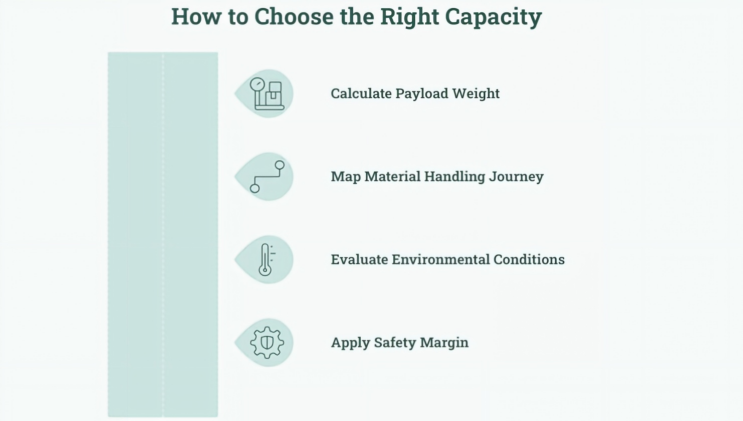
Step 1: Calculate Maximum Payload & Distribution
Determine the exact weight of your heaviest standard unit load. Determine whether the goods represent a Uniformly Distributed Load (UDL) or a Point Load. If the cargo weight is uneven, base your calculations on the densest point.
Step 2: Map the Material Handling Journey
Trace the entire path of the pallet across your supply chain:
- Will it only rest on the warehouse floor? Focus on Static Capacity.
- Will it be moved by forklift or pallet jack, or experience frequent loading and unloading during transport? Focus on Dynamic Capacity.
- Will it sit on open drive-in or selective racks without decking platforms? Focus on Racking Capacity.
Step 3: Factor in Environmental Exposure
Determine if the pallet will enter blast freezers, cold storage units, heated wash stations, or outdoor storage yards exposed to direct UV rays. Adjust resin selection accordingly.
Step 4: Apply a Safety Margin
As a practical starting point, you may consider a safety margin above the expected working load. The appropriate margin should be confirmed with the pallet manufacturer based on the test method and operating conditions.
FAQ
How much weight can a plastic pallet hold?
Plastic pallet capacity varies by design and application. Light-duty models may support under 500 kg in static load, while heavy-duty models can support 3,000–6,000+ kg under suitable conditions. Always check the manufacturer’s tested rating for the specific pallet.
What is the difference between static and dynamic pallet capacity?
Static capacity is the load a pallet can support while stationary on a fully supported floor. Dynamic capacity applies when the pallet is moved by a forklift or pallet jack and is therefore affected by movement, vibration, braking, and shock loads.
Can I increase a plastic pallet’s load capacity by adding steel tubes later?
Generally, no. Steel reinforcement channels are designed into the pallet during the manufacturing process. Steel tubes must normally be specified during procurement.
What is acceptable “deflection” for a pallet on a warehouse rack?
Under standard ISO 8611 guidelines, maximum deflection under full rated capacity should not exceed 2% of the rack span (e.g., around 20 mm on a standard 1,000 mm span). Excessive sag indicates that the pallet may be overloaded or under-specified for the rack setup.
Why is static capacity so much higher than dynamic or racking capacity?
Static loads apply non-moving compression forces over fully supported surfaces. Dynamic and racking operations introduce movement, vibration, point stress, and unsupported spans, which can place greater stress on the pallet structure.
Can plastic pallets be used on warehouse racks?
Yes, but only when the pallet is specifically rated for the rack system and expected load. Buyers should verify the pallet’s racking capacity, rack beam spacing, load distribution, and operating conditions before use.
Does pallet size affect load capacity?
Yes. Pallet dimensions affect the span between support points and how the load is distributed across the deck. However, size alone does not determine capacity. Structure, material, reinforcement, and design are also important.
Conclusion & Call to Action
Choosing the right load capacity for plastic pallets is a balancing act between operational safety, supply chain longevity, and capital outlay. By clearly defining your static, dynamic, and racking requirements, accounting for load distribution, and applying proper safety margins, you can protect both your workforce and your inventory.
Need expert assistance specifying heavy-duty plastic pallets for your facility?
Contact our engineering team today to request custom load testing reports, technical datasheets, or a tailored quote for your logistics operations.