Plastic vs Wooden Pallets: Cost, Durability & TCO Comparison Guide
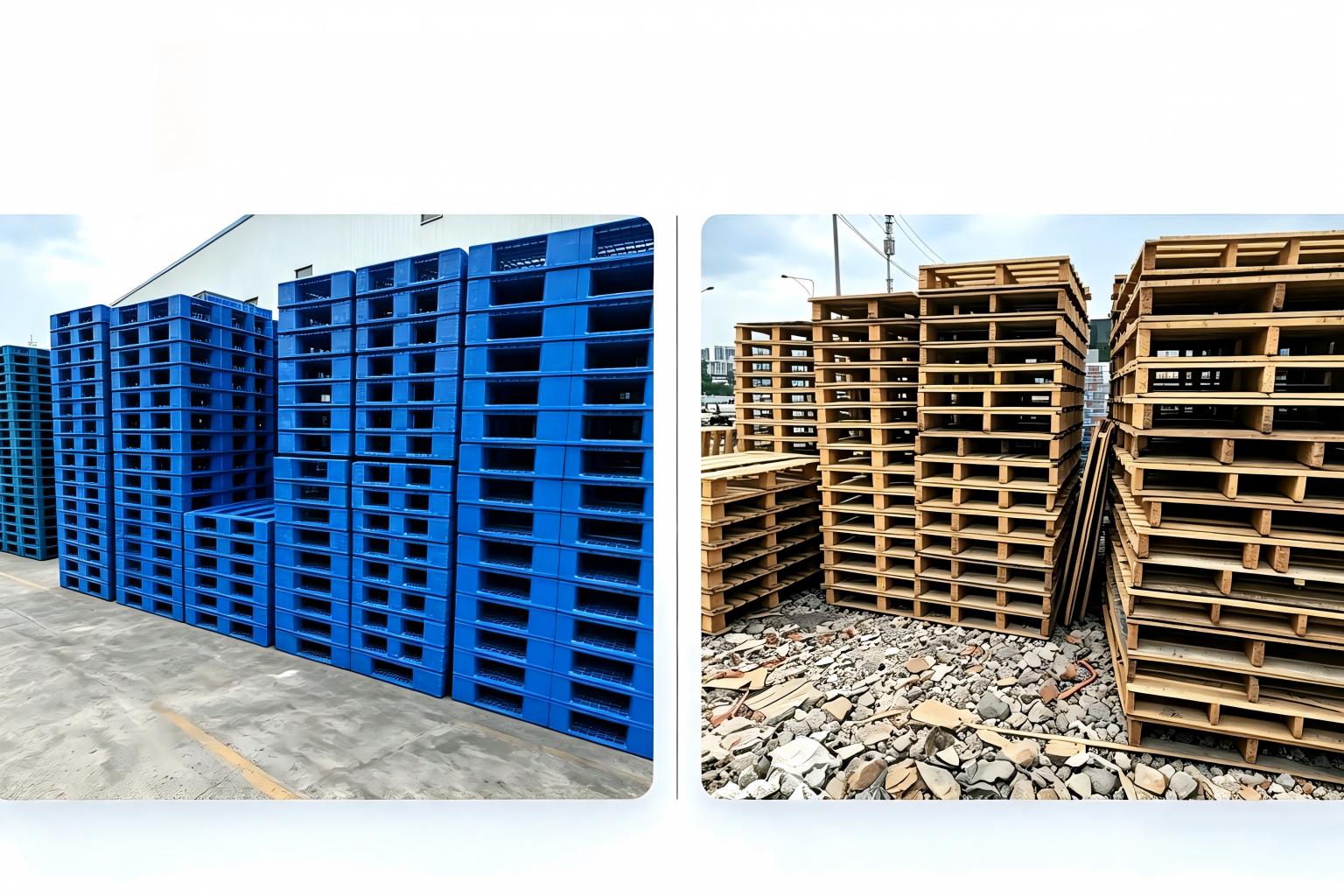
Both plastic pallets and wooden pallets are widely used across industries, but they perform differently in terms of cost, durability, maintenance, and long-term value.
The lowest purchase price does not always mean the lowest total cost. Factors such as service life, repair frequency, handling efficiency, hygiene requirements, and reuse cycles all affect the final investment value.
In this guide, we compare plastic pallets and wooden pallets from different perspectives to help you find the right pallets.
Cost Comparison
Initial Purchase
Purchase cost is the first factor to consider when make desision. From a rough perspective, virgin plastic pallets’ basic cost range is typically 1.5 – 3 times or higher than wooden pallets.
However, plastic pallets last longer than wood pallet, so the initial cost can not elevate long term cost and cost efficiency based on capacity.
For example, with the same capacity, prices of 100% recycled plastic pallets and plywood pallets have slight differences. But plastic pallets have lighter self-weight, can save your shipping cost.
Long-Term Cost
For reusable logistics systems, the actual cost of a pallet includes more than the initial purchase price.
You should also consider: Replacement frequency, Repair and maintenance costs, Product damage risks, Storage and transportation efficiency, Service life and reuse cycles
Repairing or replacing one pallet may not seem expensive at first. However, across hundreds or thousands of pallets, frequent repairs and replacements can significantly increase operating costs.
When evaluating pallet investment, the more important question is not:
“How much does one pallet cost?”
The better question is:
“How much does each successful trip cost?”
Cost Per Trip: A More Accurate Way to Measure Pallet Value
For reusable supply chains, cost per trip is often more meaningful than the purchase price.
The basic calculation is:
Total Pallet Cost ÷ Number of Successful Trips = Cost Per Trip
For reusable logistics, the most meaningful measurement is not the purchase price. For example: A wooden pallet may have a lower initial price, but fewer reuse cycles can increase the cost of each trip. A plastic pallet may cost more initially, but hundreds of reuse cycles can reduce the average cost over time.
Sometimes, the initial investment may be higher, but the long-term cost efficiency can be significantly improved through longer service life.
Durability Comparison: How Long Can Plastic and Wooden Pallets Last?
To understand the real cost of plastic and wooden pallets, it is important to consider their service life and reuse capability. A pallet’s value is not only determined by its purchase price, but also by how many successful trips it can support before replacement.
Plastic Pallets
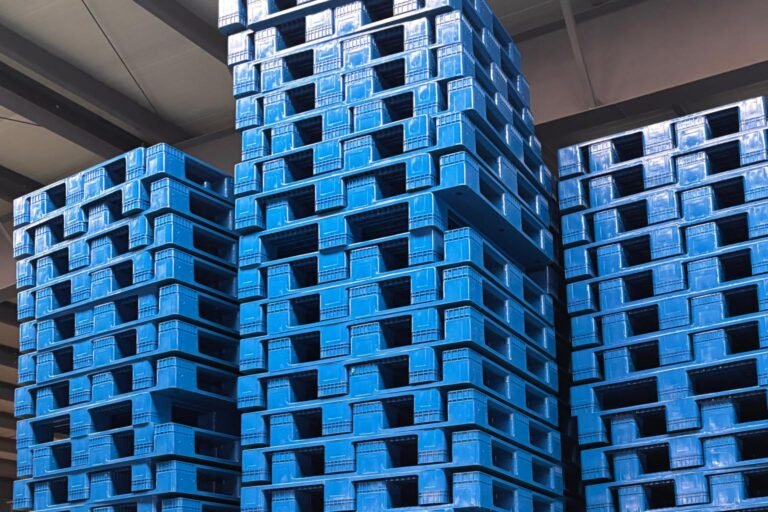
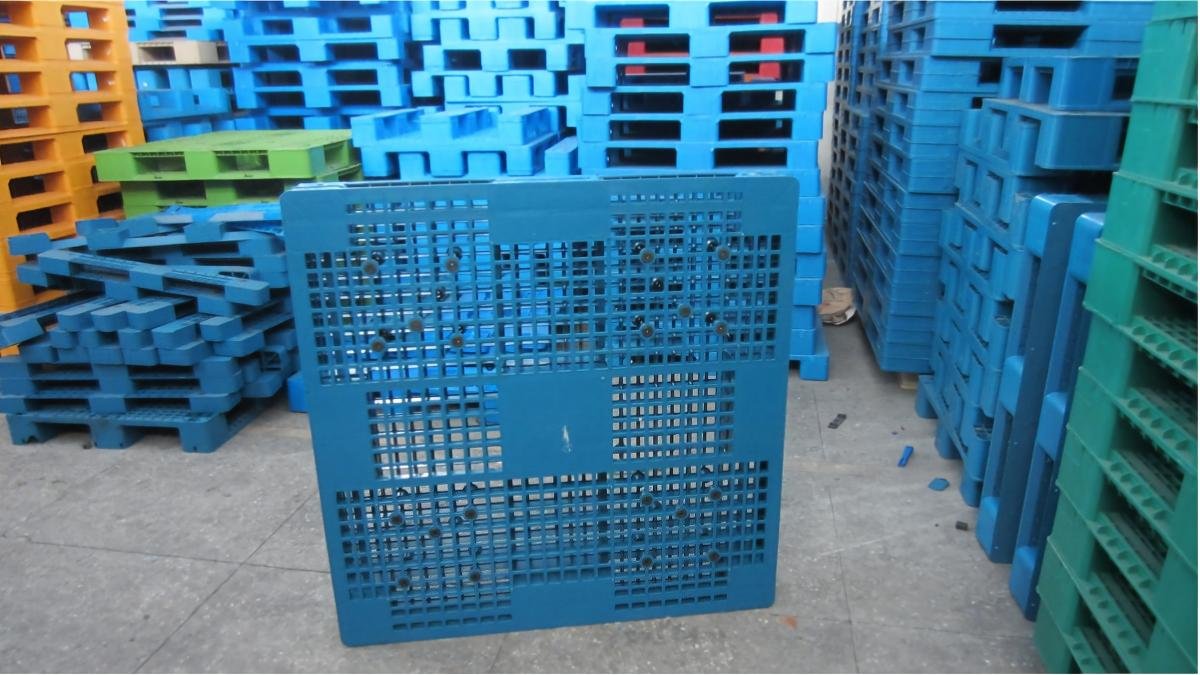
Plastic pallets are designed for repeated use in demanding logistics environments. Made from durable materials such as virgin HDPE or PP, they provide consistent performance under moisture, temperature changes, and frequent handling.
The average lifespan of virgin plastic pallets is around 5–10 years, our pallets can achieve 7 – 10 years, with many models achieving 500–1,000+ reuse cycles depending on pallet design, load conditions, and operating environment.
Recycled plastic pallets usually have a shorter service life compared with virgin plastic pallets. However, they can still provide reliable reuse performance in many applications, depending on material quality and working conditions.
Their one-piece structure avoids common issues found in wooden pallets, such as broken boards, loose nails, and splinters, making them suitable for long-term reusable logistics systems.
Wooden Pallets
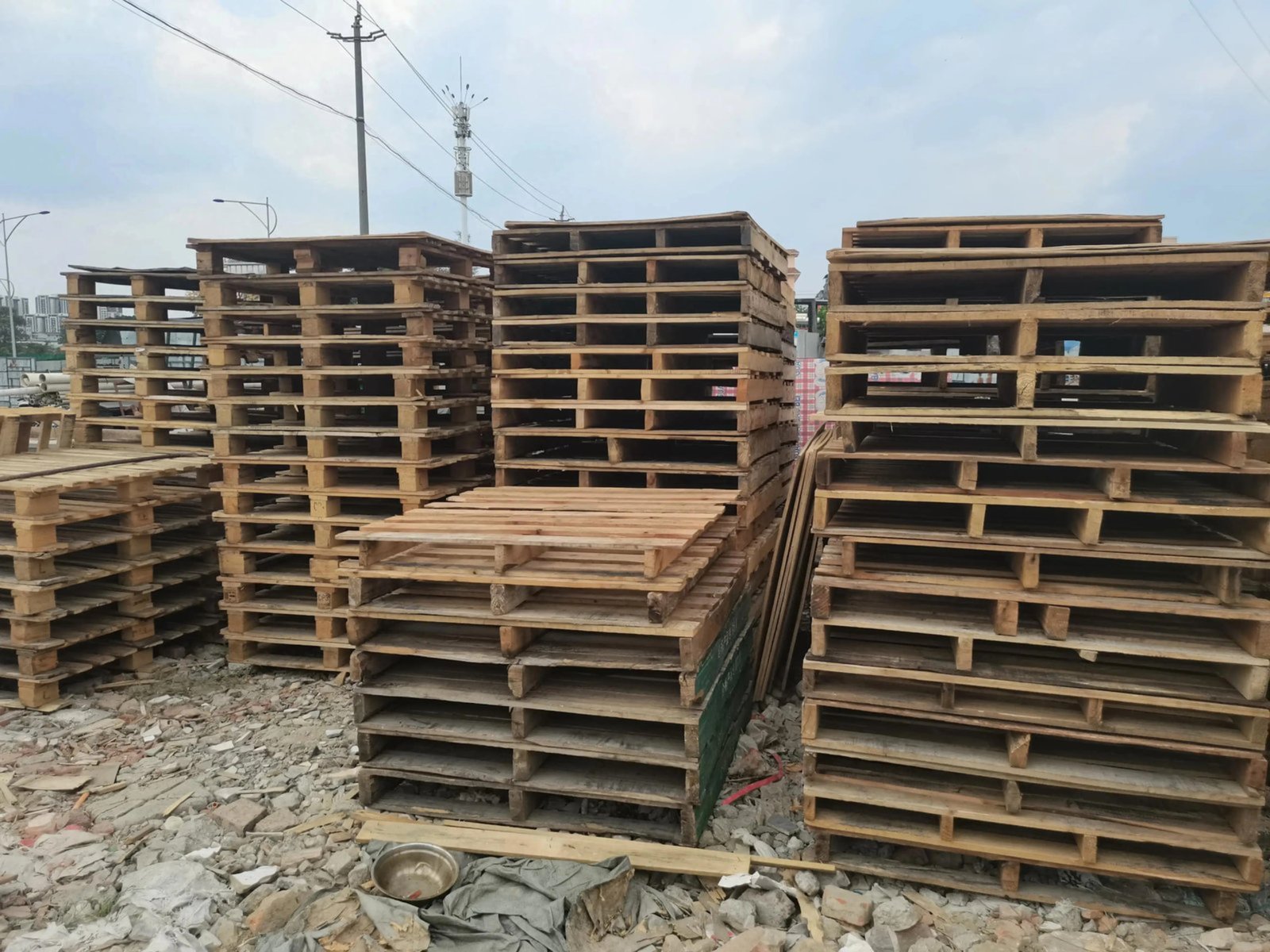
Wooden pallets remain popular because of their low initial cost and wide availability. They are commonly used for domestic transportation, short-term storage, and one-way shipping.
The average lifespan of hardwood and softwood pallets is around 1–3 years, with approximately 10–15 reuse cycles under normal operating conditions before major repairs or replacement are required.
Plywood pallets are mainly designed for export and one-way applications. Their reuse capability is usually limited because the material structure is more sensitive to moisture, impact, and repeated handling.
Compared with plastic pallets, wooden pallets generally require more frequent inspection, repair, and replacement to maintain safe operation.
Total Cost of Ownership (TCO): The Real Cost Beyond Purchase Price
Total Cost of Ownership (TCO) includes: Initial investment, Replacement frequency, Repair costs, Handling efficiency, Service life.
TCO gives companies a clearer understanding of the actual value of each pallet solution.
Replacement Cost Over the Pallet Lifecycle
A virgin plastic pallet has a 5+ year lifecycle & 500 reuse trips, you won’t need to replace it in its average life period. In contrast, even under well-maintained conditions, a same-capacity wooden pallet lasts only 15 to 20 trips before requiring complete replacement
That’s to say, to achieve the same 500-trip use, you may need to repurchase wooden pallets over 20 times. Despite having a lower unit price (around ⅓ the cost of plastic), the frequent repurchasing of wooden pallets leads to higher long-term replacement expenses.
Repair and Maintenance Costs
Reusable plastic pallets generally require very little maintenance. You only need to inspect pallet condition, clean surfaces when necessary, and remove damaged units.
Wooden pallets have higher repair frequency and need more attention due to nail & wood structure. Pallets must be inspected regularly: you shall replace damaged boards, change lost nails, and sort out molded or pest-infested pallets.
In 3 years and 60 trips (average lifespan of wood pallets), a single wooden pallet normally needs 10+ repairs due to nail structure and material. Plastic pallets require nearly 0 repairs with more use trips.
Even for single-use, wood pallets’ quality problems, mold, leakage, and pests may lead to severe cargo loss.
Operational Efficiency
Compared to wooden pallets, plastic pallets have consistent specifications, without nails or splinters. This eliminates equipment jams and packaging damage, avoiding unexpected losses. They are widely used as automated warehouse pallets to improve warehousing efficiency. For example:
3-Runner Pallets have smooth bottom runners that prevent conveyor jams, ideal for high-speed automated sorting and distribution centers.
6-Runner Pallets’ full-perimeter base evenly distributes heavy loads, perfect for double-stacking and high-bay rack storage in manufacturing.
Nestable pallets like 9-Leg Nestable Pallets, can nest together to save footprint, drastically reducing return logistics and export shipping costs.
While wooden pallets suit basic single-use storage, plastic pallets offer irreplaceable precision that optimizes automated workflows and lowers long-term operational costs.
Quick Comparison Between Plastic and Wooden Pallets
| Comparison Factor | Virgin Plastic Pallet | Recycled Plastic Pallet | Solid Wood Pallet | Plywood Pallet |
| Initial Cost | Highest
1.5–3× cost of solid wood |
Low to Moderate
Comparable to plywood |
Moderate
~1/3 cost of virgin plastic |
Lowest
Similar to recycled plastic |
| Service Life & Trips | 5–10+ Years
500–1,000+ reuse trips Zero early replacement |
1–3 Years
10–30 trips Moderate lifecycle |
1–2 Years
10–15 trips per board Requires ongoing repair |
0.5–1 Year
1–5 trips Primarily single-use / export |
| Durability & Impact | Maximum
Impervious to moisture, chemicals, & cold storage |
Moderate
Brittle in sub-zero temps; good static load |
Moderate
Prone to splintering, rot, & loose nails |
Low
Poor moisture resistance; delaminates under heavy load |
| Maintenance Need | Minimal to Zero
No loose boards/fasteners Cleaning cost <$0.10/trip |
Minimal
One-piece structure Non-repairable when cracked |
High
Requires regular inspection, re-nailing, & board swap |
None (Disposable)
Non-repairable Discarded after failure |
| Hygiene & Compliance | Highest (Pharma/Food)
Non-porous, washable FDA/GMP compliant |
Moderate
Washable Not ideal for direct food contact |
Low
Porous, absorbs moisture Requires ISPM 15 heat treatment |
High for Export
Processed wood board Naturally exempt from ISPM 15 |
| Automation Compatibility | Optimal
High dimensional precision Best for AS/RS, AGVs, & AMRs |
Good
Uniform dimensions Suitable for light/medium conveyors |
Poor to Fair
Variable dimensions Loose nails can jam AS/RS belts |
Fair
Uniform flat deck Deflects easily under heavy racking loads |
| Best Applications | Closed-loop logistics, high-bay automated racking, cold chain | Static warehouse storage, light-duty logistics, one-way export | General domestic transport, heavy industrial machinery, heavy static loads | One-way international export shipments, light-to-medium single trips |
| Lifecycle Value (TCO) | Superior Long-Term Value
Lowest cost per trip ($0.10–$0.60) |
High Short-Term Value
Excellent ROI for static/export use |
High Ongoing Cost
Low upfront, high maintenance & replacement |
Low Financial Risk
Low upfront cost for one-way shipping |
Final Thought
Both plastic pallets and wooden pallets have their own advantages.
Wooden pallets remain a practical choice for companies that prioritize low upfront costs, simple transportation, and short-term applications.
Plastic pallets are often a better choice for companies that need a longer service life, lower maintenance requirements, better hygiene performance, stable dimensions for automation, and reliable performance in closed-loop logistics systems.
The best pallet solution depends on your supply chain requirements, operating environment, and expected reuse cycles.
As a professional plastic pallet manufacturer, we provide not only standard pallet products but also customized solutions based on your application needs. Contact our engineering team to discuss your requirements and find the right plastic pallet solution for your logistics operation.