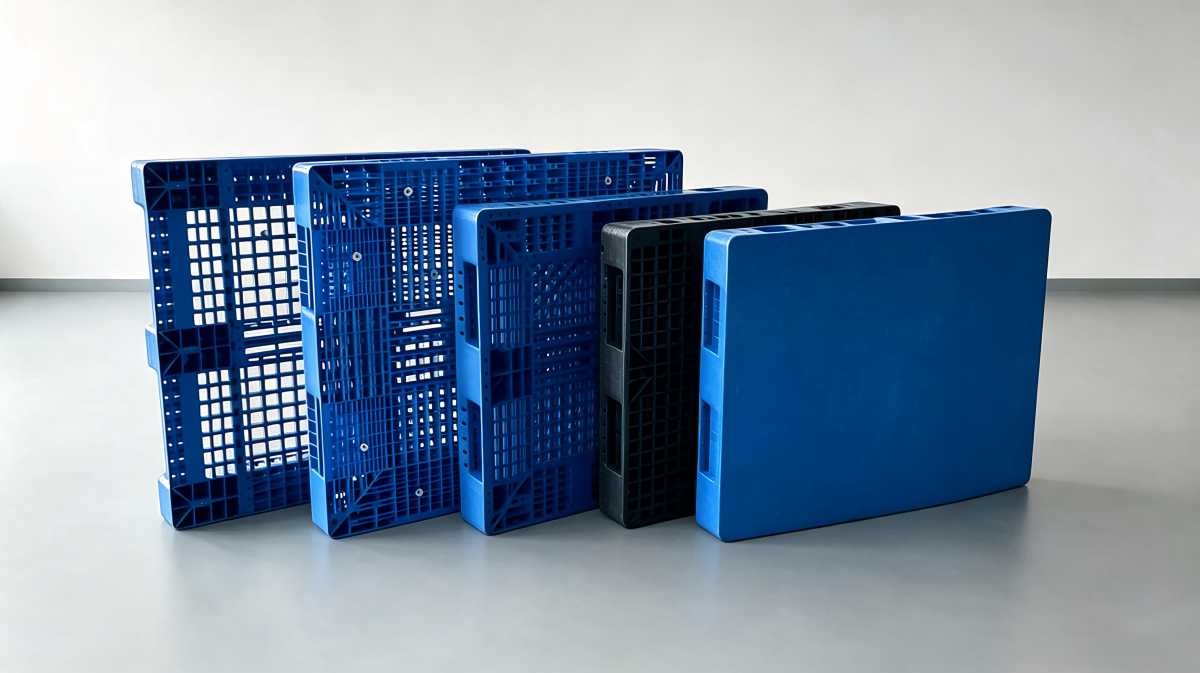
Food and pharmaceutical logistics require more than a strong pallet. The pallet must also support good hygiene practices, resist moisture, and remain easy to clean.
But not every plastic pallet is food-grade. A food-grade plastic pallet needs suitable materials, hygienic design, and appropriate compliance documentation. It should also match the temperature, load, handling, and cleaning conditions of the application.
This guide explains what makes a plastic pallet food-grade and what you should check before choosing one.
What Does “Food Grade” Mean for Plastic Pallets?
A food-grade plastic pallet is made from materials and components that are suitable for the intended food-contact application and conditions of use.
“Food grade” does not simply mean that a pallet is made of plastic. The material, additives, manufacturing process, surface design, and intended use all matter.
Food Grade vs Hygienic
Food grade focuses on material safety and compliance, while hygienic focuses on cleanliness and design. For food logistics, a pallet should ideally meet both.
For example, a grid-deck pallet made from food-grade virgin HDPE can meet food-grade requirements, but its open structure may be harder to clean. A closed-deck pallet made from the same material can offer both food-grade material suitability and a more hygienic design.
What Makes a Plastic Pallet Food Grade?
Several factors determine whether a plastic pallet is suitable for food-related applications. The most important are the raw material, hygienic design, cleaning performance, and regulatory compliance.
Food Grade Raw Materials
Food-grade HDPE / PP means the materials are suitable for the intended food-contact application under the relevant use conditions.
For food applications, virgin plastic is commonly preferred. Virgin HDPE/PP comes directly from controlled resin production. Its material source is easier to identify and trace. It also provides better control over the polymer composition and additives used during production.
Recycled plastic is not automatically unsuitable for food-contact applications. It requires stronger controls. Contamination, additives, and the effectiveness of the recycling process need to be considered.
Hygienic Design
Food grade tells material suitability, while hygienic design tells how well the pallet supports cleaning and sanitation.
A common design is a closed deck. Unlike a grid deck with many openings, a closed deck provides a continuous surface with fewer gaps and dirt traps. This makes the pallet easier to inspect and clean.
Smooth surfaces and rounded corners can also help reduce residue accumulation. A well-designed pallet should have as few unnecessary recesses and difficult-to-reach areas as possible.
This design is especially useful in food processing, beverage production, cold storage, and other environments where pallets may be exposed to moisture or frequent washdown.
Easy Cleaning and Sanitation
Plastic does not absorb water in the same way as wood, and a suitable surface can be washed and sanitized more easily.
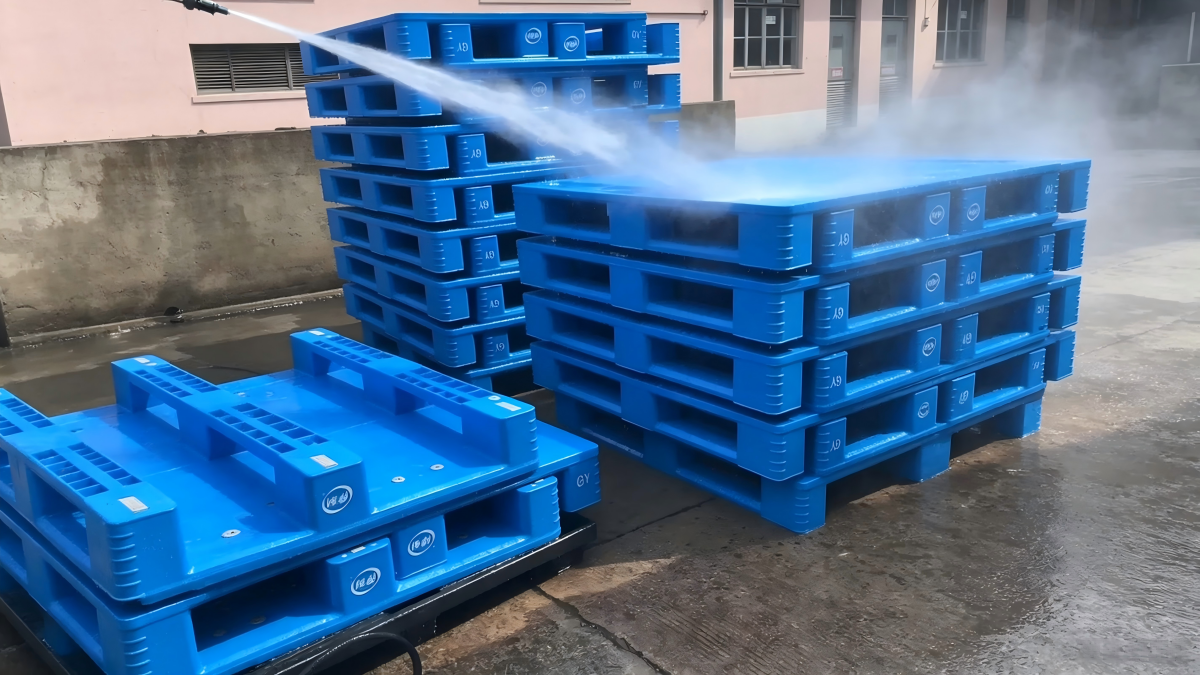
For food applications, the pallet should be compatible with the site’s cleaning method. This may include water washing, pressure washing, detergents, or approved sanitizing procedures.
Cleaning performance also depends on the pallet design. A smooth closed deck is generally easier to clean than a surface with deep grooves or hard-to-reach cavities.
Food Contact & Regulatory Compliance
Food-contact compliance depends on the material, additives, intended use, and conditions of use.
In the United States, FDA maintains regulations and inventories covering substances used in food-contact applications. The applicable requirements depend on the specific substance and intended conditions of use.
For exports, it is also important to check the destination market. European food-contact applications, for example, follow their own regulatory framework. Recycled plastics for food contact are specifically addressed by EU Regulation 2022/1616.
Benefits of Food Grade Plastic Pallets in Different Applications
Food-grade plastic pallets are used across many logistics environments. Their value is not limited to direct food handling. Their hygiene, moisture resistance, dimensional consistency, and reusable design also make them suitable for automated and controlled logistics systems.
In Cold Chain
Cold chain logistics creates demanding conditions for pallets. Frozen food, meat, seafood, dairy products, and other temperature-sensitive products may be stored and transported in cold and wet environments.
Plastic pallets do not absorb water like wood, are anti-mold, and resist sub-zero environments. They can naturally keep goods away from dampness, mold, and bacteria, securing cargo’s quality.
In Food & Beverage Logistics
Our food-grade plastic pallets all made from 100% virgin premium HDPE/PP material, meet global food safety standards (such as FDA, USDA, and HACCP) from the material source.
Their smooth surfaces are free of nails, sharp edges, or splinters, eliminating the risk of puncturing vacuum seals, bulk bags, or cardboard boxes.
In Pharmaceutical Logistics
Pharmaceuticals require strict contamination-free environments (cGMP standards). Food-grade plastic pallets eliminate dust, bark particulates, withstand frequent hot-water washdowns and high-pressure steam cleaning.
They resist corrosive chemicals, acids, and atmospheric moisture, keeping sensitive medical compounds safe during transit and storage.
In Retail Distribution
Modern retail distribution centers rely heavily on Automated Storage and Retrieval Systems (ASRS), shuttle systems, and AGVs. Plastic pallets are precision-molded to exact dimensions, ensuring seamless automated handling without jams.
Besides, clean, uniform plastic pallets can move directly from the distribution center onto the retail display floor without looking dirty or unkempt.
In Shipping & Export Logistics
Wooden pallets used in international shipping must undergo heat treatment or fumigation to comply with ISPM-15 regulations. Plastic pallets are completely exempt, simplifying customs clearance and avoiding shipping delays.
Comparatively, plastic pallets are also lighter than wood pallets and can save your shipping cost. For sensitive cargo shipping like fruit, dairy, etc., stable plastic pallets can help to avoid unnecessary loss due to temperature, moisture, mold, pests, and cracking during shipping.
Maintenance & Cleaning of Food Grade Plastic Pallets
Manual washing
For light stains and usual cleaning, you could easily remove pallets’ dust and water stains with a wet cloth or brush.
If there’s debris, heavy dirt, or grass, you can also use an air compressor or vacuum for pre-cleaning.
Pressure washing
High-pressure washing is a good way for quick cleaning or heavy dirt, mud, grease, and warehouse residue.
Just use a moderate-pressure water jet to clean the deck and bottom runners. Take car do no hold the nozzle too close to the pallet surface.
Automatic pallet washing
Some distribution centers may be equipped with a washing system. Pallets will pass through water jets, detergent, rinsing, and sometimes drying.
It’s common in food processing, beverage, pharmaceutical, and other hygienic applications. Best for high-volume operations.
Sanitizing
For food-contact or hygienic applications, washing alone may not be enough.
After cleaning, an appropriate food-contact sanitizer can be applied according to its manufacturer’s concentration and contact-time requirements.
The pallet should then be rinsed if required by the sanitizer instructions and completely dried.
How to Choose the Right Food Grade Plastic Pallet
Material
Confirm whether the pallet uses virgin HDPE, PP, or another suitable material. Ask for material and food-contact documentation when required.
Operating Environment.
A pallet for frozen food may need different performance from one used in a dry warehouse. Check the operating temperature, cleaning method, and moisture exposure.
Load Capacity
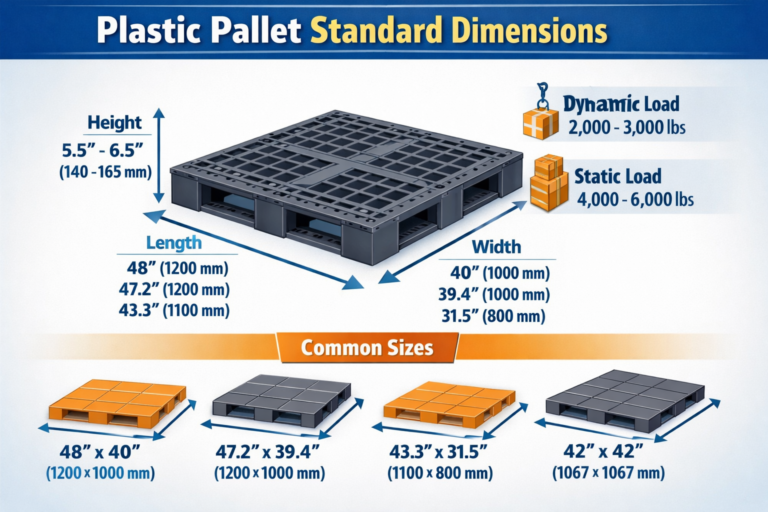
Check the static, dynamic, and racking load ratings. The pallet should be selected according to the actual load and handling conditions rather than the maximum number shown on a product sheet.
ASRS
For automated warehouses, check pallet dimensions and compatibility with conveyors, ASRS, AGVs, and other equipment.
Compliance Requirements
Specifically for your market, ask the supplier which standards and documents apply to the material and intended application.
A good food-grade pallet is not simply a pallet made from plastic. It is a complete solution that combines suitable material, hygienic design, reliable performance, and traceable documentation.
FAQ
What makes a plastic pallet food grade?
A food-grade plastic pallet uses material suitable for the intended food-contact application and is designed to support hygienic handling and cleaning. Compliance should be confirmed based on the material, use conditions, and applicable regulations.
Is HDPE food grade?
HDPE can be suitable for food-contact applications when the specific resin, additives, and intended conditions meet the applicable requirements. Not every HDPE product is automatically food grade.
Are recycled plastic pallets suitable for food applications?
Some recycled plastics can be suitable for food-contact applications, but additional controls are normally needed. The recycling source, contamination control, recycling process, and intended use must be evaluated.
Are plastic pallets FDA compliant?
A plastic pallet should not be called FDA compliant without checking the specific material and intended use. FDA requirements apply to substances and food-contact uses under specific conditions. Appropriate documentation should be requested from the supplier.
Can food grade plastic pallets be used in cold storage?
Yes. Plastic pallets are commonly used in refrigerated and frozen logistics. However, the pallet material must be suitable for the actual operating temperature.
Final Thought
When picking a suitable food‑grade plastic pallet for food processing, cold‑chain, pharmaceutical logistics or automated warehousing, base your selection on material, load capacity, operating temperature, cleaning procedures and handling systems. We supply full product specs, material data and compliance documents to match your use‑case. Visit our hygienic plastic pallet page or contact us to go over your project requirements.
My Role
I gather application‑specific requirements from customers covering material standards, load, temperature, cleaning workflow and automation equipment. I screen compliant food‑grade pallet options and help obtain relevant specifications and compliance paperwork for their operations.
About Euro Plastic Pallet
Euro Plastic Pallet is a plastic pallet manufacturer with over 20 years of production experience, headquartered in China. We provide high‑quality, customized plastic pallet solutions for brand owners, wholesalers, and distributors. With 60+ injection/rotational molding machines, each staffed with quality‑control personnel having 5+ years of experience, we ensure consistent product quality.
Services
- Products: Complete plastic pallet solutions
- Customization: Custom colors, logos, and molds
- International Certifications: ISO 9001, CE, REACH, ROHS, SGS, FDA, GRS
Quality Assurance
- Raw Material Testing: Complies with RoHS, REACH standards, meeting international strength and performance requirements
- Precision Manufacturing: Automated injection molding, precision assembly, accuracy ±0.1mm
- Comprehensive Inspection: 100% factory testing, ISO 9001 sampling protocols ensuring high standards
- Certifications: ISO 9001, CE, REACH, ROHS, SGS, FDA standards compliance
Production Capacity
- High‑Quality Manufacturing: 60+ injection/rotational molding machines following ISO 9001
- Premium Customization: Customized solutions for global brands
- Flexible Solutions: Customer‑specific customization enhancing market competitiveness
Global Impact
Serving global customers with reliable plastic pallets and customized logistics packaging solutions, supporting business growth and customer trust.