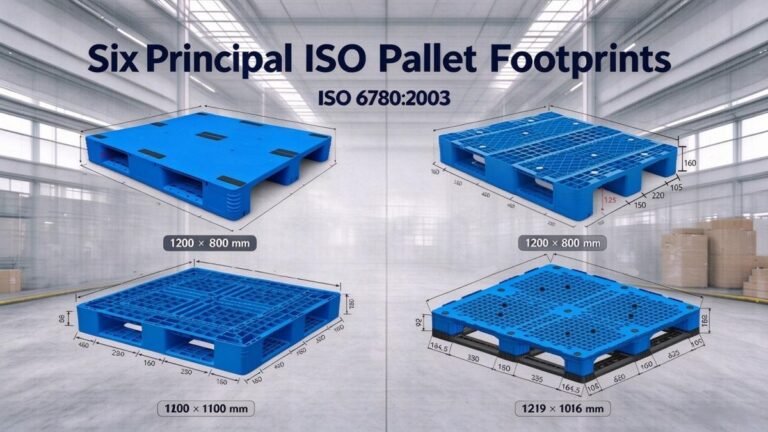
Choosing wrong pallet sizes costs companies thousands in wasted space and shipping inefficiencies every year.
Standard pallet sizes are globally accepted dimensions like 1200x1000mm, 1200x800mm, and 48"x40". These dimensions ensure compatibility across supply chains. Moreover, they maximize container space and reduce logistics costs worldwide.
| Standard Size (mm) | Standard Size (inches) | Region/Standard | ISO Code | Primary Use | Load Capacity |
|---|---|---|---|---|---|
| 1200 x 1000 | 47.2" x 39.4" | Europe/Asia | ISO1 | Industrial, Export | 1500kg |
| 1200 x 800 | 47.2" x 31.5" | Europe (EUR) | ISO2 | General Cargo, FMCG | 1500kg |
| 1219 x 1016 | 48" x 40" | North America (GMA) | ISO1 | Retail, Food & Beverage | 1360kg |
| 1100 x 1100 | 43.3" x 43.3" | Asia Pacific | ISO5 | Container Shipping | 1500kg |
| 1140 x 1140 | 44.9" x 44.9" | Chemical (CP3) | ISO4 | Chemicals, Drums | 1250kg |
| 1067 x 1067 | 42" x 42" | North America | ISO6 | Paint, Chemicals | 1136kg |
| 1219 x 1219 | 48" x 48" | North America | - | Drums, Bulk Liquids | 1500kg |
| 1165 x 1165 | 45.9" x 45.9" | Australia | - | Rail Transport | 1200kg |
| 800 x 600 | 31.5" x 23.6" | Europe | ISO3 | Retail Display | 500kg |
| 600 x 400 | 23.6" x 15.7" | Europe | - | Quarter Pallet, Display | 250kg |
After 20 years in the plastic pallet manufacturing business, I've seen companies make costly mistakes. However, these mistakes can be avoided by understanding standardization. Therefore, let me share what I've learned about standard plastic pallet dimensions.
What Makes a Plastic Pallet Size "Standard"?
Standard sizes aren't random numbers. Instead, they solve real supply chain problems worldwide.
A standard plastic pallet size means dimensions widely accepted in specific regions or industries. Moreover, these ensure compatibility with equipment, containers, and storage systems. Furthermore, they work across the entire supply chain.
The Cost of Ignoring Standards
For example, I remember when a client insisted on custom 1150x950mm pallets. They claimed their products were "unique." However, six months later, they called me frantically. Their pallets wouldn't fit properly in standard containers. As a result, they wasted 15% of truck space. Furthermore, their retail partners couldn't handle them efficiently.
Three Critical Problems Standards Solve
Standard plastic pallet sizes exist for important reasons. First, they maximize space efficiency in transportation. Additionally, standard containers, trucks, and cargo planes are designed around these dimensions. For instance, a 1200x1000mm pallet fits perfectly in standard shipping containers. Moreover, this creates minimal waste.
Second, they ensure equipment compatibility. Furthermore, forklifts, conveyor systems, and automated warehouses are built to handle standard dimensions.
Third, they enable supply chain integration. Consequently, when everyone uses the same sizes, products move smoothly. Therefore, they flow from manufacturer to retailer seamlessly.
Most Common Standard Dimensions
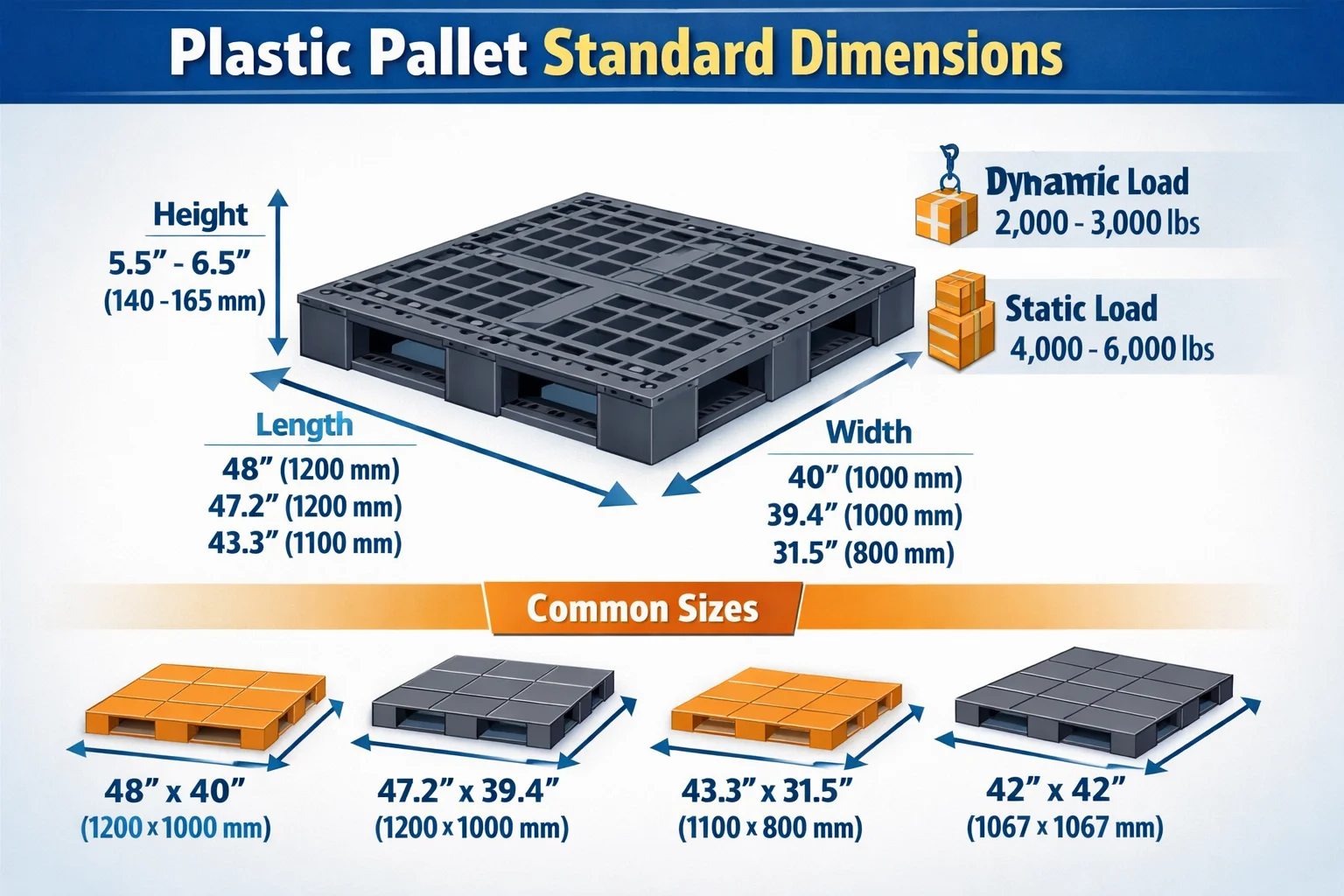
The most common standard plastic pallet sizes include three key dimensions. First, the 1200x1000mm size is popular in Asia and Europe. Second, the 1200x800mm serves as the European standard. Third, the 48"x40" dominates North American markets.
However, these aren't arbitrary choices. Instead, each dimension was carefully calculated. Therefore, they optimize container loading, truck capacity, and warehouse efficiency.
Which Global Standard Pallet Sizes Should You Know?
Different regions prioritize different standard dimensions. However, this is based on their logistics infrastructure.
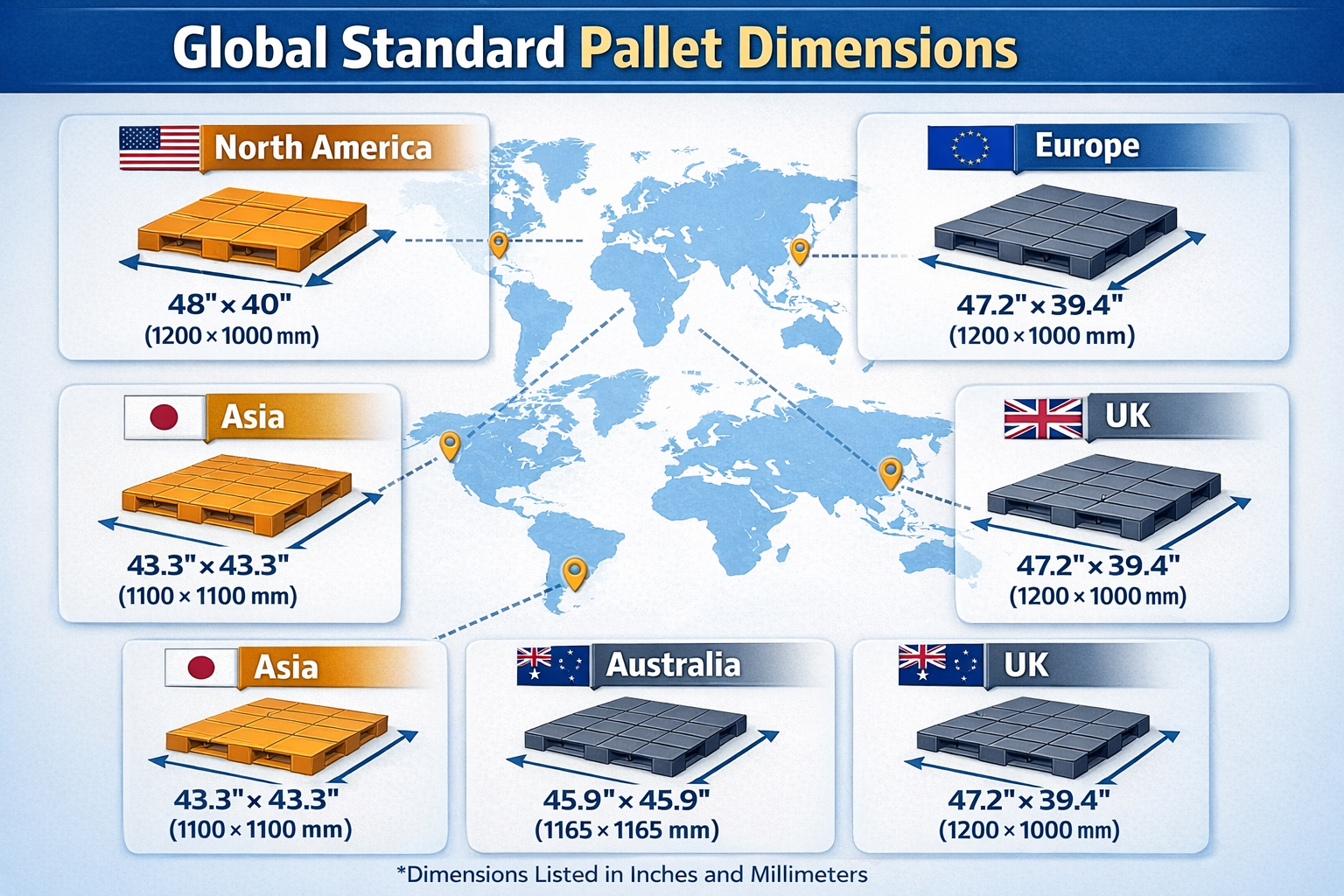
The main global standard pallet sizes are 1200x1000mm (Asia/Europe), 1200x800mm (Europe), 48"x40" (North America), and 1100x1100mm (Asia). Moreover, each is optimized for regional container and transport systems.
North American Standards
The 48"x40" (1219x1016mm) GMA pallet dominates North America. For example, I've supplied thousands of plastic versions to food and retail companies. Additionally, it fits perfectly in North American truck trailers. Furthermore, it works with their automated systems.
Other popular sizes include 42"x42" for paint and chemicals. Moreover, the 48"x48" size works for drums and bulk liquids. Therefore, each serves specific industry needs. Additionally, they maintain regional compatibility.
European Standards
Europe loves the 1200x800mm EUR pallet. However, this size maximizes efficiency in European truck dimensions and rail systems. Additionally, I've supplied many 1200x1000mm industrial pallets. These serve chemical and FMCG companies well.
Furthermore, the smaller 800x600mm and 600x400mm quarter pallets work great for retail displays. As a result, these sizes integrate perfectly with European logistics infrastructure.
Asian Standards
The 1100x1100mm size rules Asia. This is because it fits efficiently in ISO containers. For example, two pallets side by side in a 20-foot container create minimal waste. Additionally, the 1200x1000mm size is popular for export businesses.
Moreover, I've seen these dimensions work perfectly for electronics. They also handle automotive parts and consumer goods well. Therefore, Asian manufacturers often choose based on their primary export markets.
Regional Comparison Table
| Region | Primary Size | Secondary Size | Best For |
|---|---|---|---|
| North America | 48"x40" | 42"x42" | Retail, Food |
| Europe | 1200x800mm | 1200x1000mm | General Cargo |
| Asia | 1100x1100mm | 1200x1000mm | Export/Import |
| Australia | 1165x1165mm | - | Rail Transport |
How Do ISO International Standards Define Pallet Dimensions?
ISO standards provide the global framework for pallet dimensioning and compatibility.
ISO 6780 defines six international standard pallet sizes. These include 1219x1016mm, 1200x1000mm, 1200x800mm, 1140x1140mm, 1100x1100mm, and 1067x1067mm. Furthermore, these ensure global supply chain compatibility.
| ISO Code | Dimensions (mm) | Dimensions (inches) | Height (mm) | Weight (kg) | Tolerance (±mm) | Global Usage |
|---|---|---|---|---|---|---|
| ISO1 | 1200 x 1000 | 47.2" x 39.4" | 144-150 | 15-25 | ±2 | Europe, Asia |
| ISO2 | 1200 x 800 | 47.2" x 31.5" | 144-150 | 12-22 | ±2 | Europe (EUR) |
| ISO3 | 1000 x 1200 | 39.4" x 47.2" | 144-150 | 15-25 | ±2 | Europe, Australia |
| ISO4 | 1140 x 1140 | 44.9" x 44.9" | 144-150 | 18-28 | ±2 | Chemicals, Asia |
| ISO5 | 1100 x 1100 | 43.3" x 43.3" | 144-150 | 16-26 | ±2 | Asia Pacific |
| ISO6 | 1067 x 1067 | 42.0" x 42.0" | 144-150 | 15-25 | ±2 | North America |
The ISO 6780 Standard Framework
The International Organization for Standardization created ISO 6780. This solved global logistics chaos. Previously, every country had different dimensions. As a result, international trade was extremely complicated.
However, these six ISO standard plastic pallet sizes aren't random selections. Instead, each dimension was calculated for optimal container utilization. Therefore, the calculations consider truck dimensions, container sizes, and handling equipment. Moreover, they work across different regions.
Container Compatibility Analysis
Container compatibility analysis shows fascinating efficiency differences. For example, a 20-foot container can fit 9-10 pieces of 1200x1000mm pallets. Consequently, this provides excellent space utilization.
However, the same container fits 11 pieces of 1200x800mm pallets. Nevertheless, this creates less optimal loading. Therefore, understanding these calculations helps companies choose the right standard size.
Choosing Based on Shipping Destinations
I always tell clients to consider their primary shipping destinations. For instance, if you're shipping mainly to Europe, the 1200x800mm standard makes sense. However, for Asia-Pacific trade, 1100x1100mm or1200x1000mm works better.
Additionally, mixed global shipping often benefits from the 1200x1000mm compromise size. Therefore, this dimension offers the best worldwide compatibility.
What Standard Sizes Work Best for Different Industries?
Industry-specific requirements often determine which standard plastic pallet dimensions work best.
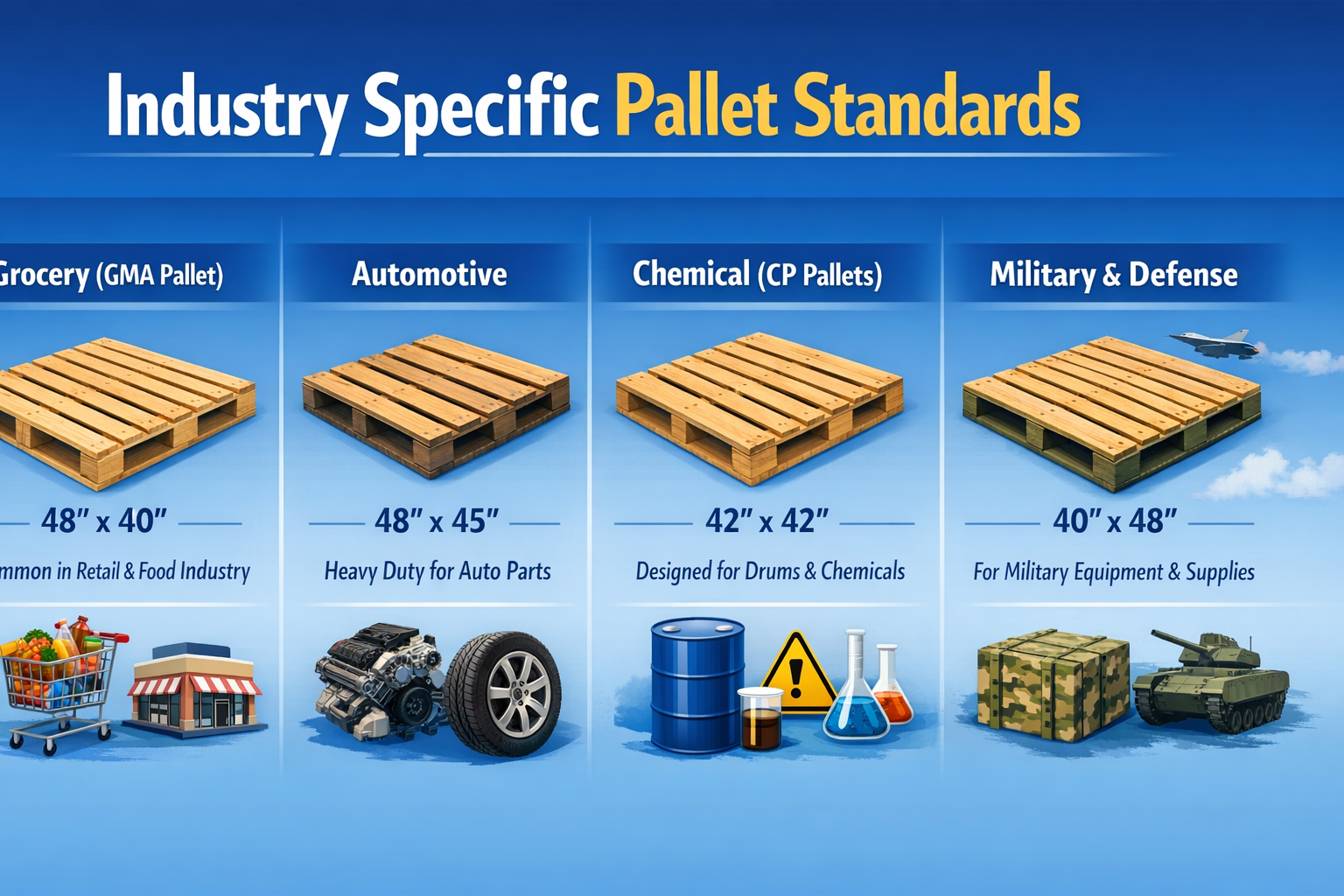
Food and pharmaceutical industries typically use 1200x1000mm and 48"x40" hygienic plastic pallets. However, automotive prefers heavy-duty custom sizes. Meanwhile, chemicals use CP-series equivalent standard dimensions.
Food and Beverage Industry Requirements
Food companies love hygienic plastic pallets in standard sizes. For example, the 1200x1000mm and 48"x40" dimensions work perfectly with food processing equipment. Additionally, they fit cold storage systems efficiently.
Furthermore, I supply blue and white plastic pallets. These colors make contamination visible. Moreover, FDA-approved materials are essential. Therefore, nestable designs help save space in food distribution centers.
Chemical Industry Standards
Chemical companies often use CP-series equivalent plastic pallets. Originally, these standards were wood pallet specifications. However, plastic versions offer chemical resistance.
For instance, the CP3 (1140x1140mm) and CP6 (1200x1000mm) are most popular in plastic. Additionally, chemical resistance and spill containment features are crucial. Therefore, these applications require specialized designs.
Pharmaceutical and Medical Applications
Pharmaceutical companies demand FDA-compliant plastic pallets in various standard sizes. Moreover, temperature validation for cold chain shipping is critical. Therefore, I've supplied specialized cleanroom-compatible pallets.
Furthermore, RFID compatibility for tracking is increasingly important. Additionally, these pallets must withstand frequent washing. They also need sterilization cycles.
Industry-Specific Comparison
| Industry | Preferred Size | Key Features | Color Preference |
|---|---|---|---|
| Food/Beverage | 1200x1000mm, 48"x40" | FDA approved, washable | Blue, White |
| Chemical | CP3, CP6 equivalent | Chemical resistant | Black, Gray |
| Pharmaceutical | Various standard | Cleanroom compatible | White |
| Automotive | 1200x1000mm= | Heavy duty, anti-static | Black |
| Retail | 1200x800mm | Display ready | Blue |
How Do You Choose the Right Standard Pallet Size?
Selecting the optimal standard plastic pallet size requires careful analysis. However, you must consider your specific logistics requirements and constraints.
Choose standard pallet sizes by evaluating your transportation methods, storage systems, product dimensions, and primary shipping destinations. Therefore, this approach maximizes efficiency and minimizes costs.
Transportation Efficiency Analysis
First, start with your primary transportation mode. For example, if you ship mainly by truck in North America, 48"x40" makes sense. However, for container shipping to Asia, 1100x1100mm or 1200x1000mm optimizes space.
Additionally, calculate how many pallets fit in your typical shipment vehicle. Therefore, even small improvements in loading efficiency create significant cost savings. Moreover, these savings compound over time.
Storage System Compatibility
Next, measure your existing warehouse equipment. For instance, rack systems, conveyor widths, and door openings all influence optimal pallet dimensions. Furthermore, I've seen companies buy standard pallets that don't fit their existing infrastructure.
Therefore, check forklift specifications, aisle widths, and vertical clearances before deciding. As a result, this prevents costly compatibility issues later.
Product Characteristics Assessment
Additionally, consider your product dimensions and weight distribution. Standard pallet sizes should accommodate your products efficiently. However, avoid overhang or wasted space.
Furthermore, calculate how your products nest or stack on different standard dimensions. Sometimes, a slightly smaller standard size carries your products more efficiently. Therefore, size isn't always better.
Cost-Benefit Analysis Framework
Finally, compare total ownership costs, not just purchase prices. Standard sizes cost less initially. Moreover, they have better resale value. Additionally, they integrate easier with partners' systems.
However, custom sizes might seem attractive. Nevertheless, they often create long-term logistics headaches. Therefore, calculate shipping costs, storage efficiency, and handling time differences. Moreover, compare these between options.
Conclusion
In conclusion, standard plastic pallet sizes optimize global supply chains. They ensure compatibility, reduce costs, and maximize efficiency. Moreover, they work across industries worldwide.
My Role
As an expert in plastic pallet manufacturing with over 20 years of experience, I help companies optimize their logistics operations. Furthermore, my expertise focuses on proper standard pallet size selection. Therefore, my insights come from working with diverse industries. Additionally, I understand real-world supply chain challenges.
About Euro Plastic Pallet
PEuro Plastic Pallet is a plastic pallet manufacturer with over 20 years of production experience. We are headquartered in China. Moreover, we provide high-quality, customized plastic pallet solutions. We serve brands, wholesalers, and distributors.
Additionally, with over 60 injection molding/rotational molding machines, we ensure quality. Each machine has quality control personnel with over 5 years of experience. Therefore, we ensure stable quality.
Services
- Products: One-stop plastic pallet solutions
- Customization: Custom colors, custom logos, custom molds
- International Certifications: ISO 9001, CE, REACH, ROHS, SGS, FDA, GRS
Quality Assurance
- Raw Material Testing: Compliant with RoHS and REACH standards, strength and performance meet international requirements
- Precision Manufacturing: Automated injection molding, precision assembly, accuracy ±0.1mm
- Complete and Sampling Inspection: 100% factory inspection, ISO 9001 sampling, ensuring high standards
- Certifications: Passed ISO 9001, CE, REACH, ROHS, SGS, FDA standards
Production Capacity
- High-Quality Manufacturing: Over 60 injection molding/rotational molding machines, following ISO 9001
- High-End Customization: Providing customized solutions for global brands
- Flexible Solutions: Customized according to customer needs