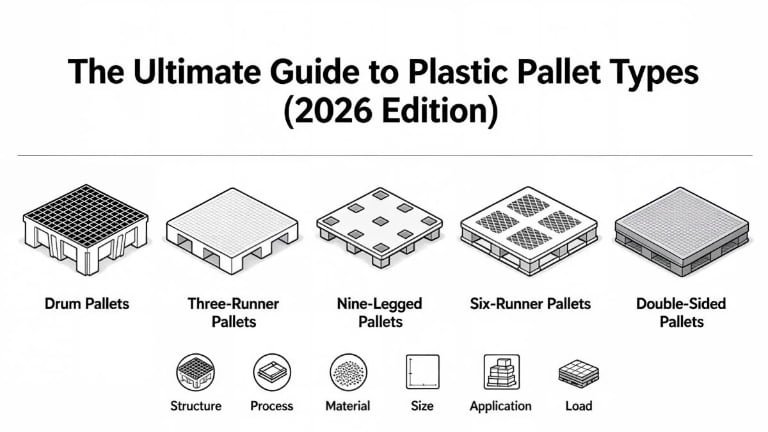
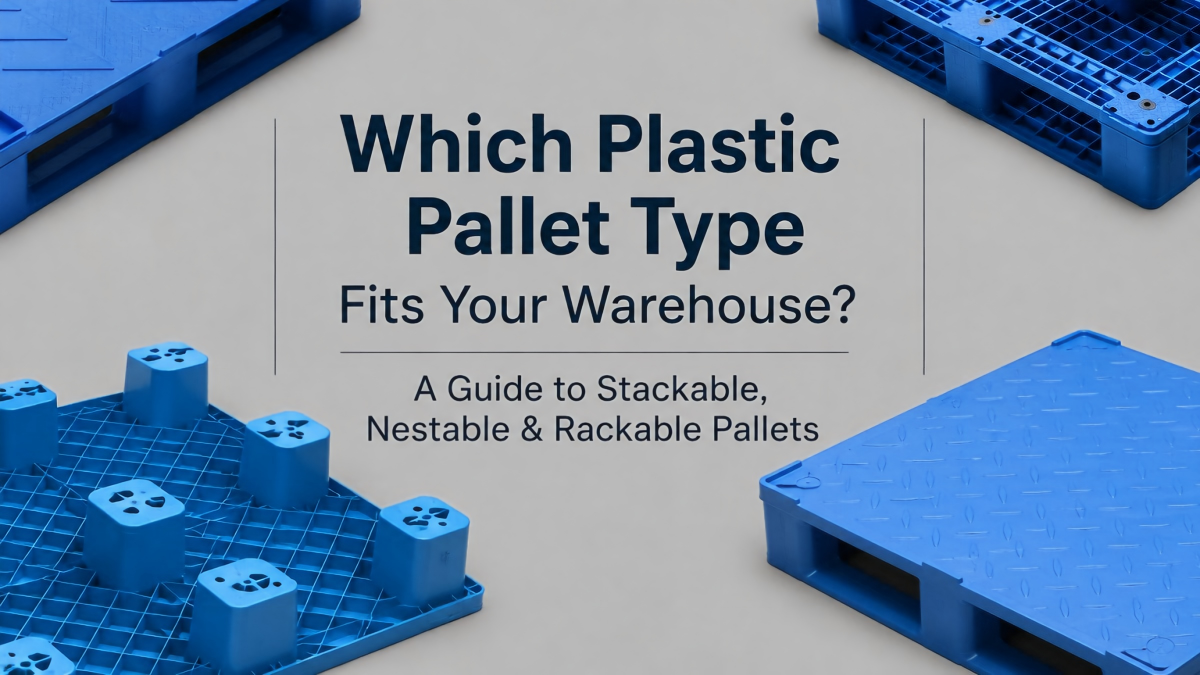
Different pallet designs solve different warehouse and logistics problems. Some are made for floor stacking. Some save space when empty. Others are designed for pallet racking and automated warehouses.
Choosing the right type can improve storage efficiency, handling safety, and transportation costs. This guide explains the main types of plastic pallets and helps you choose the right option for your warehouse.
What Are the Main Types of Plastic Pallets?
By handling method, main plastic pallet types include stackable, nestable, and rackable pallets.
One important point is that these types are not always mutually exclusive. A pallet can be both stackable and rackable, depending on its design and the pallet’s load rating.
Stackable Plastic Pallets
Stackable plastic pallets are designed to support loaded pallets stacked directly on top of each other.
A stackable pallet should have static capacity. With good weight distribution to support several stacking layers. Better have forklift entries for easy transit.
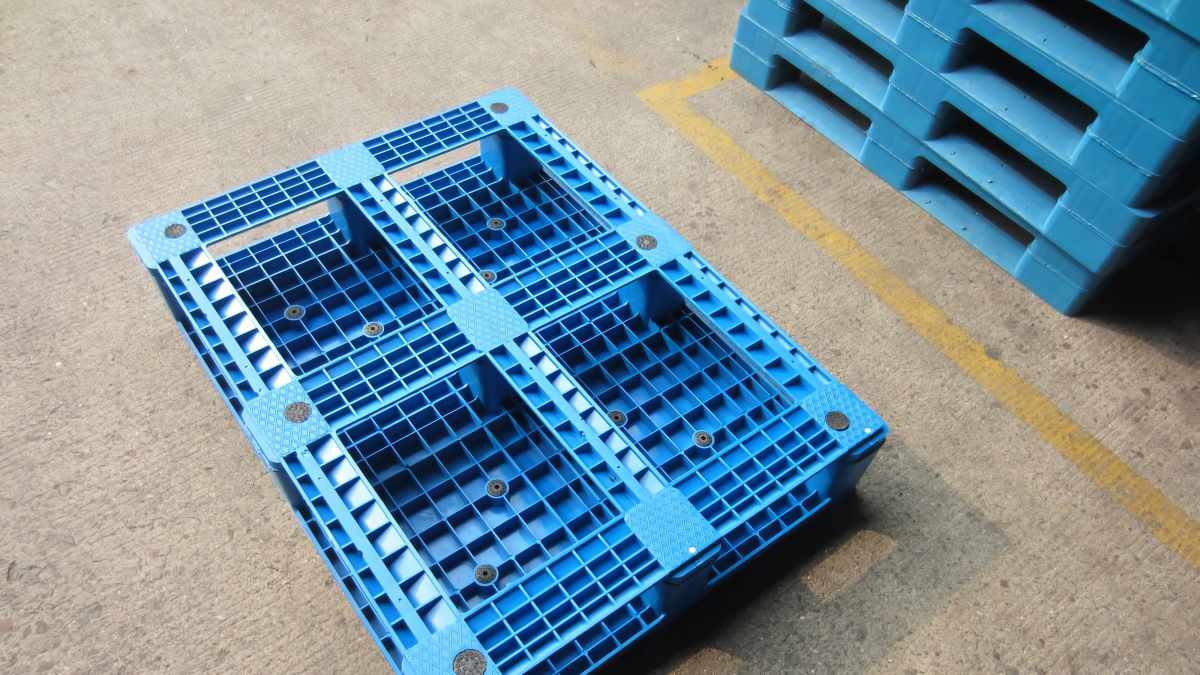
Full-perimeter pallets feature a bottom framework, very stable for stacking. Double-sided plastic pallets provide maximum surface contact, are also widely used for stacking.
Sometimes a 9-foot plastic pallet can also be used for stacking, but the lower-layer cargo should be flat at least to support the upper pallet.
Nestable Plastic Pallets
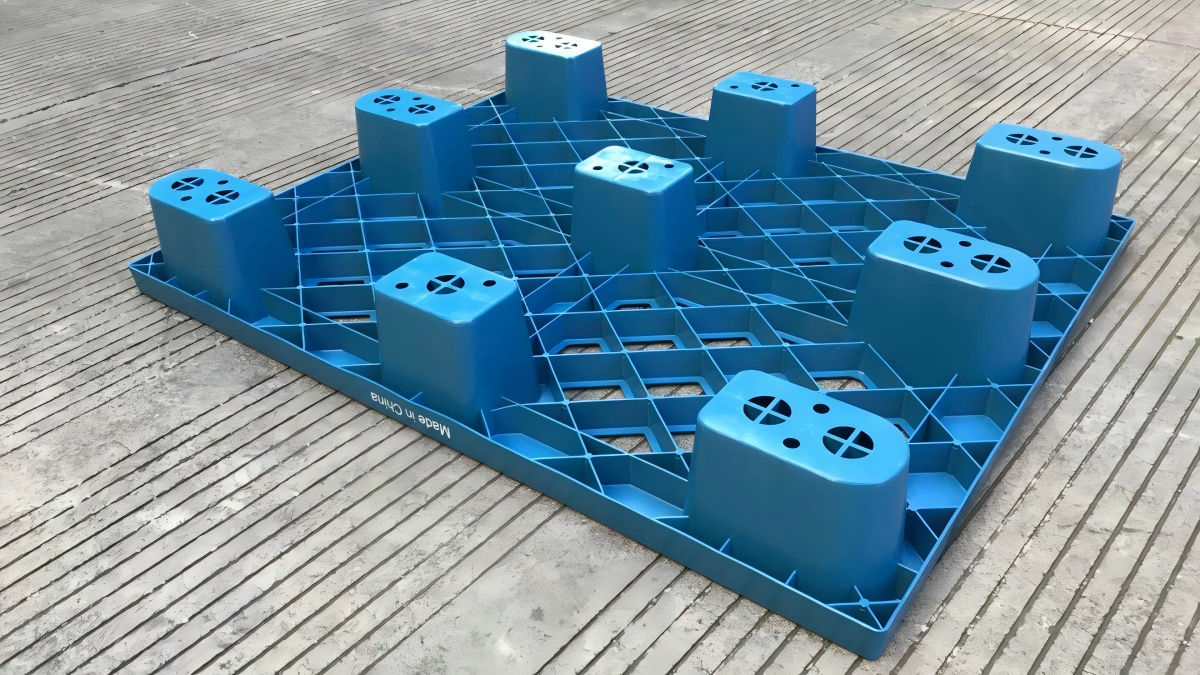
Nestable plastic pallets are designed with tapered/hollow feet, the empty pallets can fit inside one another.
This design reduces the space needed for empty pallet storage. It can also help reduce the volume occupied during return transportation.
Nestable pallets are often useful for export, distribution, retail, and closed-loop logistics. They are especially attractive when empty pallets need to be moved frequently.
Rackable Plastic Pallets
Rackable plastic pallets are designed for storage in pallet racking systems.
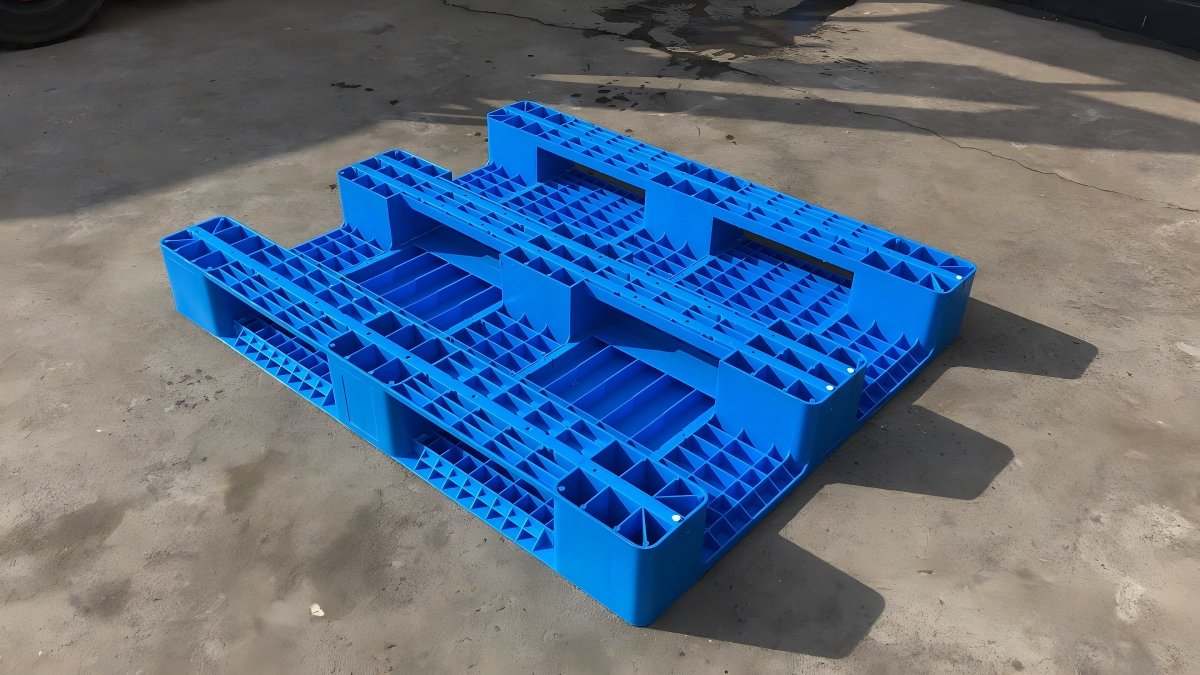
Racking systems require the pallet to span the open space between rack beams. That’s why 3-runner pallets are mainly used for high-bay racking.
When they are placed across the rack beams, the 3 runners span the beams and distribute weight evenly. Besides, compared with full-perimeter pallets, fewer runners make them lighter.
Stackable vs Nestable vs Rackable Plastic Pallets
The three types solve different problems.
Stackable pallets are mainly designed for loaded floor stacking.
Nestable pallets are mainly designed to save space when empty.
Rackable pallets are designed for pallet racking.
However, these properties can overlap. Some plastic pallets are both stackable and rackable. Some nestable pallets may also support limited stacking when their design allows it.
Therefore, do not choose a pallet based only on its name. Check the actual specifications and intended application.
| Feature | Stackable | Nestable | Rackable |
| Main purpose | Floor stacking | Empty-space saving | Pallet racking |
| Loaded floor stacking | Yes, depending on rating | Depends on model | Yes, depending on rating |
| Empty pallet nesting | No | Yes | Usually no |
| Pallet racking | Depends on design | Usually limited | Yes |
| Empty storage efficiency | Medium | High | Medium |
| Return transportation | Medium | High | Medium |
| Typical application | Warehouse floor storage | Export and distribution | High-bay warehouses |
How to Choose the Right Plastic Pallet for Your Warehouse
The best plastic pallet depends on how your warehouse operates.
How Will You Store Loaded Pallets?
If loaded pallets are stored directly on the floor, a stackable pallet may be suitable.
If pallets are stored on rack beams, choose a pallet with a verified racking capacity.
If you use both methods, consider a pallet that is designed for both stacking and racking.
How Do You Handle Empty Pallets?
Think about what happens after a pallet is unloaded.
If empty pallets stay in your warehouse, nesting may not be a major priority.
If they are frequently returned or transported between locations, nestable pallets can reduce storage volume and transportation space.
How Much Weight Will the Pallet Carry?
Do not choose a pallet based only on one load figure.
Check the static, dynamic, and racking load capacities that apply to your operation.
Static capacity refers to a load on a pallet resting on a stable, flat surface. Dynamic capacity refers to handling with equipment such as a forklift or pallet jack. Racking capacity applies when the pallet is stored on rack beams.
The actual load should also be considered. A uniformly distributed load is different from a concentrated load.
What Handling Equipment Do You Use?
Your handling system can affect pallet selection.
Manual warehouses may mainly require forklift and pallet jack compatibility. Your pallet should have forklift entries.
Automated warehouses may have additional requirements. Conveyors, ASRS, AGVs, AMRs, and pallet shuttles can require specific pallet dimensions and bottom designs. For example, when selecting pallets for conveyors, make sure the pallets’ base spacing is adapted to the conveyor.
What Are Your Shipping and Storage Requirements?
Your logistics model also matters.
For export and return transportation, nesting can help reduce empty-pallet volume.
For warehouses with limited floor space, stack height and storage density are important.
For high-bay warehouses, racking performance becomes a key requirement.
The best choice is the one that fits your complete logistics cycle rather than just one stage of operation.
Other Plastic Pallet Features to Consider
Stackable, nestable, and rackable describe important pallet functions. Other design features can also affect performance.
Open Deck vs Closed Deck
Open deck pallets have openings that can provide drainage and ventilation. They are useful in applications where airflow or liquid drainage is important.
Closed deck pallets provide a more continuous surface. They are easier to clean and can be useful for hygiene-sensitive applications and small or unstable loads.
2-Way vs 4-Way Entry
A 2-way entry pallet is accessible from two sides. A 4-way entry pallet allows forklift access from four sides.
Four-way entry can provide greater handling flexibility. It may be useful in warehouses with multiple handling directions or complex material flows.
Standard vs Heavy-Duty Pallets
Heavy-duty pallets are designed for higher loads or more demanding operating conditions.
The right choice depends on the actual load, handling frequency, storage method, and service life required.
A heavier pallet is not always the best option. Over-specification can increase purchase and transportation costs.
FAQ
What are the main types of plastic pallets?
The main types include stackable, nestable, and rackable plastic pallets. Other classifications include open or closed deck, 2-way or 4-way entry, and standard or heavy-duty designs.
What is the difference between stackable and nestable pallets?
Stackable pallets are designed to store loaded pallets on top of each other. Nestable pallets are designed to fit inside one another when empty. The two designs solve different storage problems.
Are nestable pallets rackable?
Not usually, but it depends on the specific design. Some nestable pallets may have enough structural strength for certain racking applications. Always check the manufacturer’s racking rating rather than assuming that a nestable pallet is rackable.
Can a plastic pallet be both stackable and rackable?
Yes. Some plastic pallets are designed for both floor stacking and pallet racking. This can provide greater flexibility for warehouses that use both storage methods.
How do I choose the right plastic pallet for my warehouse?
Start with your storage method, load requirements, handling equipment, empty-pallet flow, and transportation needs. Then compare the pallet’s dimensions, static, dynamic, and racking capacities with your actual operating conditions.
Final Thought
Selecting the proper plastic pallet for your warehouse should be driven by your actual warehouse setup rather than product labels alone. Whether you require stackable pallets for floor‑stacking, nestable pallets for space‑efficient transport, or rackable pallets for high‑bay storage, your choice must align with load weight, handling equipment and logistics cycles. Visit our plastic pallet manufacturer page or contact us to get tailored recommendations for your warehouse and application.
My Role
I assess customers’ real‑world warehouse conditions including storage mode, handling systems and logistics cycles. I filter suitable pallet types such as stackable, nestable or rackable options and offer targeted suggestions to match their on‑site operational requirements.
About Euro Plastic Pallet
Euro Plastic Pallet is a plastic pallet manufacturer with over 20 years of production experience, headquartered in China. We provide high‑quality, customized plastic pallet solutions for brand owners, wholesalers, and distributors. With 60+ injection/rotational molding machines, each staffed with quality‑control personnel having 5+ years of experience, we ensure consistent product quality.
Services
- Products: Complete plastic pallet solutions
- Customization: Custom colors, logos, and molds
- International Certifications: ISO 9001, CE, REACH, ROHS, SGS, FDA, GRS
Quality Assurance
- Raw Material Testing: Complies with RoHS, REACH standards, meeting international strength and performance requirements
- Precision Manufacturing: Automated injection molding, precision assembly, accuracy ±0.1mm
- Comprehensive Inspection: 100% factory testing, ISO 9001 sampling protocols ensuring high standards
- Certifications: ISO 9001, CE, REACH, ROHS, SGS, FDA standards compliance
Production Capacity
- High‑Quality Manufacturing: 60+ injection/rotational molding machines following ISO 9001
- Premium Customization: Customized solutions for global brands
- Flexible Solutions: Customer‑specific customization enhancing market competitiveness
Global Impact
Serving global customers with reliable plastic pallets and customized logistics packaging solutions, supporting business growth and customer trust.