Export shipments can face avoidable costs from wooden pallets, including treatment requirements, extra weight, moisture damage, and poor space utilization.
Plastic pallets are often a practical choice for export shipping because they avoid wood-treatment concerns, reduce pallet weight, resist moisture, and can improve handling efficiency. The right choice still depends on load weight, pallet size, handling equipment, destination, and shipping method.
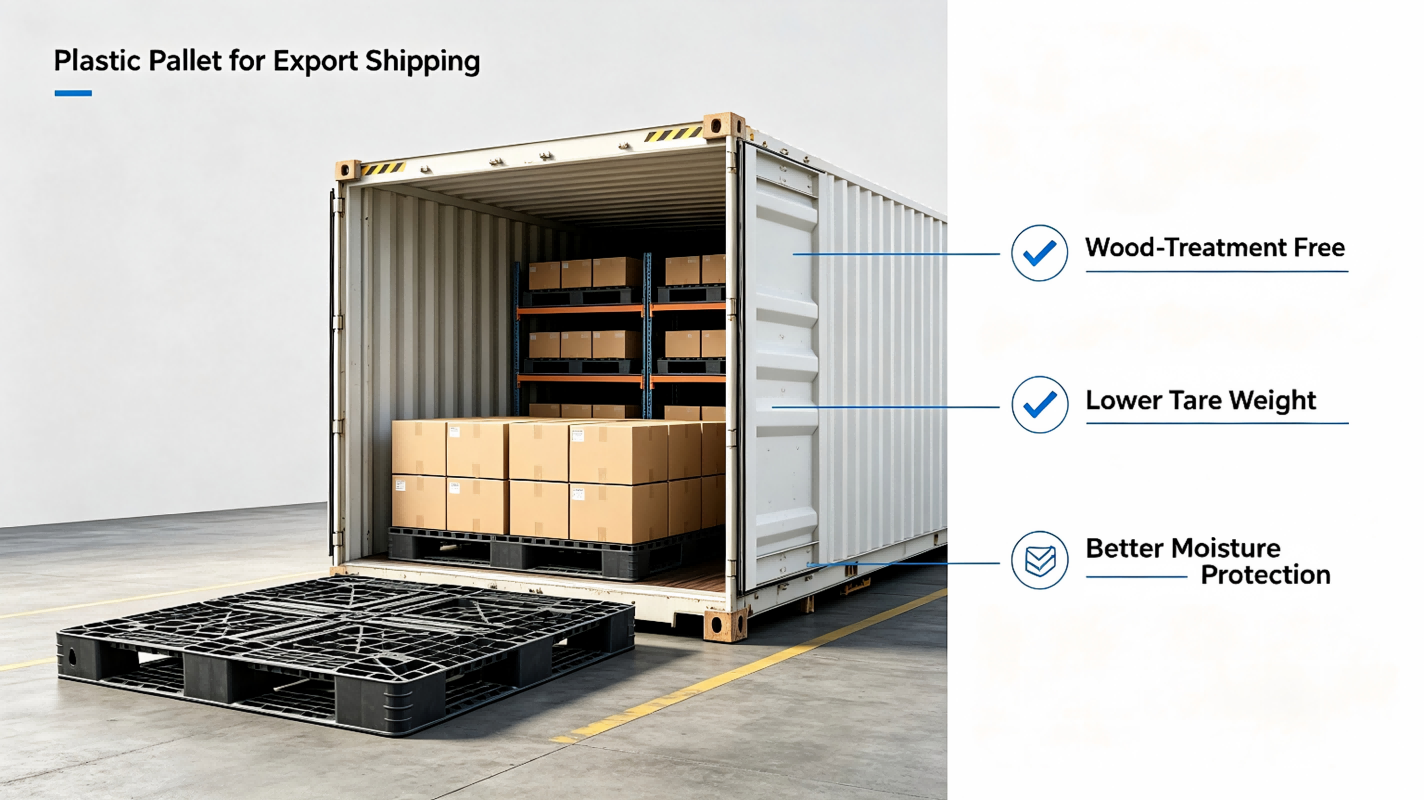
If you are comparing a one-way plastic pallet with a traditional wooden pallet, the purchase price is only one part of the decision. Export compliance, freight weight, cargo protection, storage space, and handling requirements can all affect the real cost.
Why Are Plastic Pallets Popular for Export Shipping?
Exporters often focus on the pallet price first. In practice, customs requirements, freight weight, moisture, and cargo damage can have a much larger operational impact.
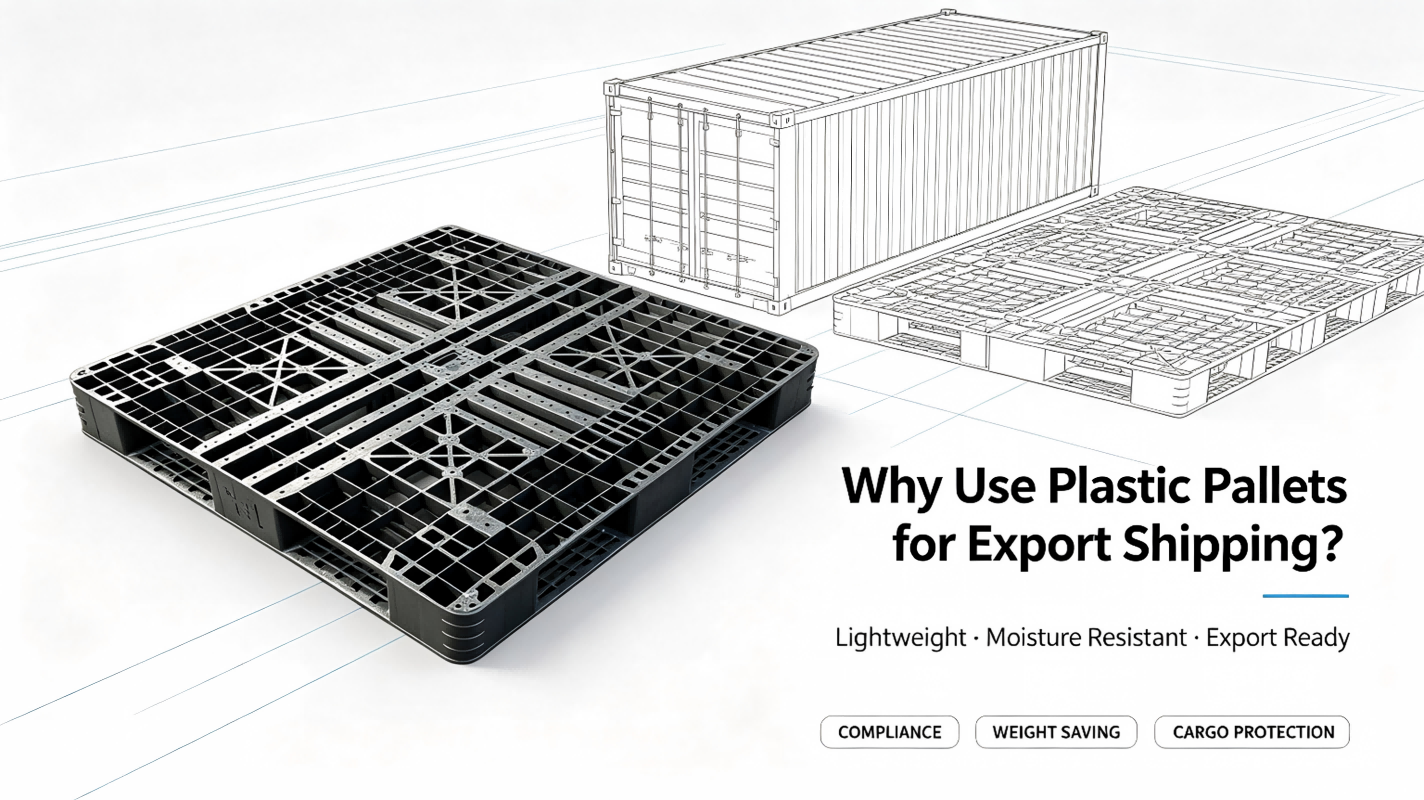
Plastic pallets are popular for international shipping because they do not require the same wood-treatment process as solid wood packaging, are resistant to moisture, and can be designed for efficient stacking and handling.
1. Easier Export Compliance
One of the biggest reasons exporters choose plastic pallets is to reduce problems associated with wooden packaging.
Solid wood pallets used in international trade can be subject to ISPM 15 treatment and marking requirements. Treatment problems, unclear markings, or inspection issues can create delays at the destination.
Plastic pallets are made from polymer materials rather than solid wood. Therefore, they avoid the wood-packaging treatment issue described above.
For exporters, this can simplify pallet preparation before shipment. There is no need to arrange conventional wood fumigation or heat treatment for the pallet itself.
However, I would not treat plastic pallets as a guarantee that every shipment will clear customs without inspection. Import requirements can vary by destination and product. The safest approach is to confirm the requirements for the specific destination before shipping.
2. Lower Pallet Weight
Weight matters in both air freight and ocean shipping.
A lightweight export pallet adds less tare weight to the shipment. This can be particularly useful when a shipment contains many pallets. Even a small difference per pallet can become significant when multiplied across a full shipment.
For air freight, where shipment weight can directly influence transportation cost, pallet weight deserves particular attention.
For container shipping, the benefit is different. Lower pallet weight can reduce the total shipment weight and may leave more weight capacity available for the actual cargo.
The key is to compare the complete shipment rather than looking only at the pallet price. A slightly more expensive pallet may make more sense if it reduces weight, simplifies export preparation, and protects the cargo effectively.
3. Better Empty-Pallet Storage
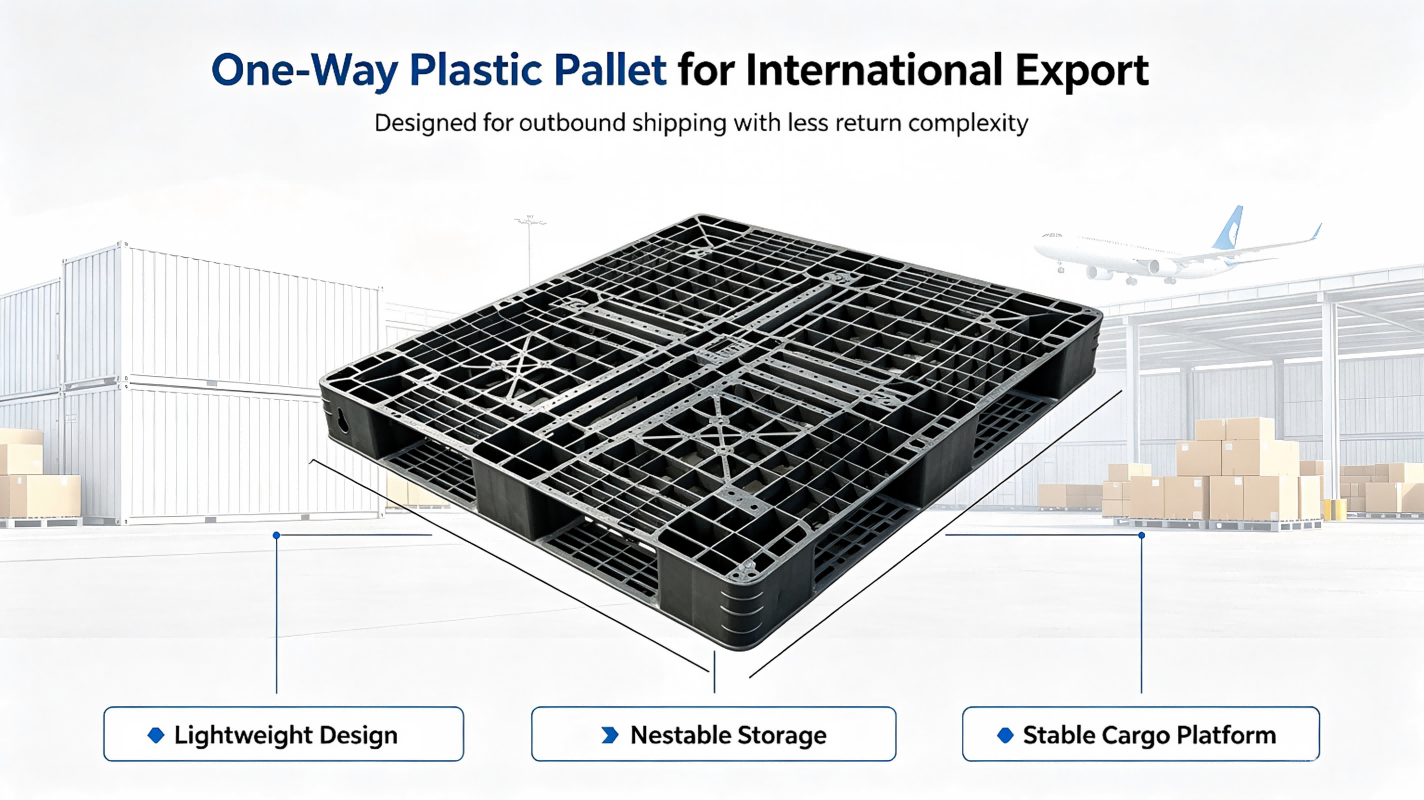
Some one-way export pallets use nestable designs, such as nine-leg grid-deck structures. When empty, these pallets can be nested together to reduce the space required for storage and transportation.
This is useful before loading and when handling empty pallets after production.
Wooden pallets usually require more vertical or floor space because they cannot be nested in the same way. For exporters with limited warehouse space, this difference can become operationally important.
Nestability can also matter when empty pallets need to be moved to a loading area. More pallets can be handled in a smaller footprint, which makes staging easier.
4. Better Protection Against Moisture
International shipments can pass through humid warehouses, ports, containers, and changing weather conditions.
Plastic pallets are resistant to moisture and do not have the same tendency to absorb water as wood. They also have smooth surfaces without exposed nails or wood splinters.
This can help reduce the risk of pallet-related packaging damage.
For products with sensitive outer packaging, such as food packaging, pharmaceutical products, electronics, and finished garments, pallet cleanliness and surface condition can be important purchasing considerations.
The right pallet still needs to match the cargo weight and handling method. Moisture resistance alone is not enough to make a pallet suitable for every export shipment.
What Are the Main Benefits of Plastic Pallets for Export?
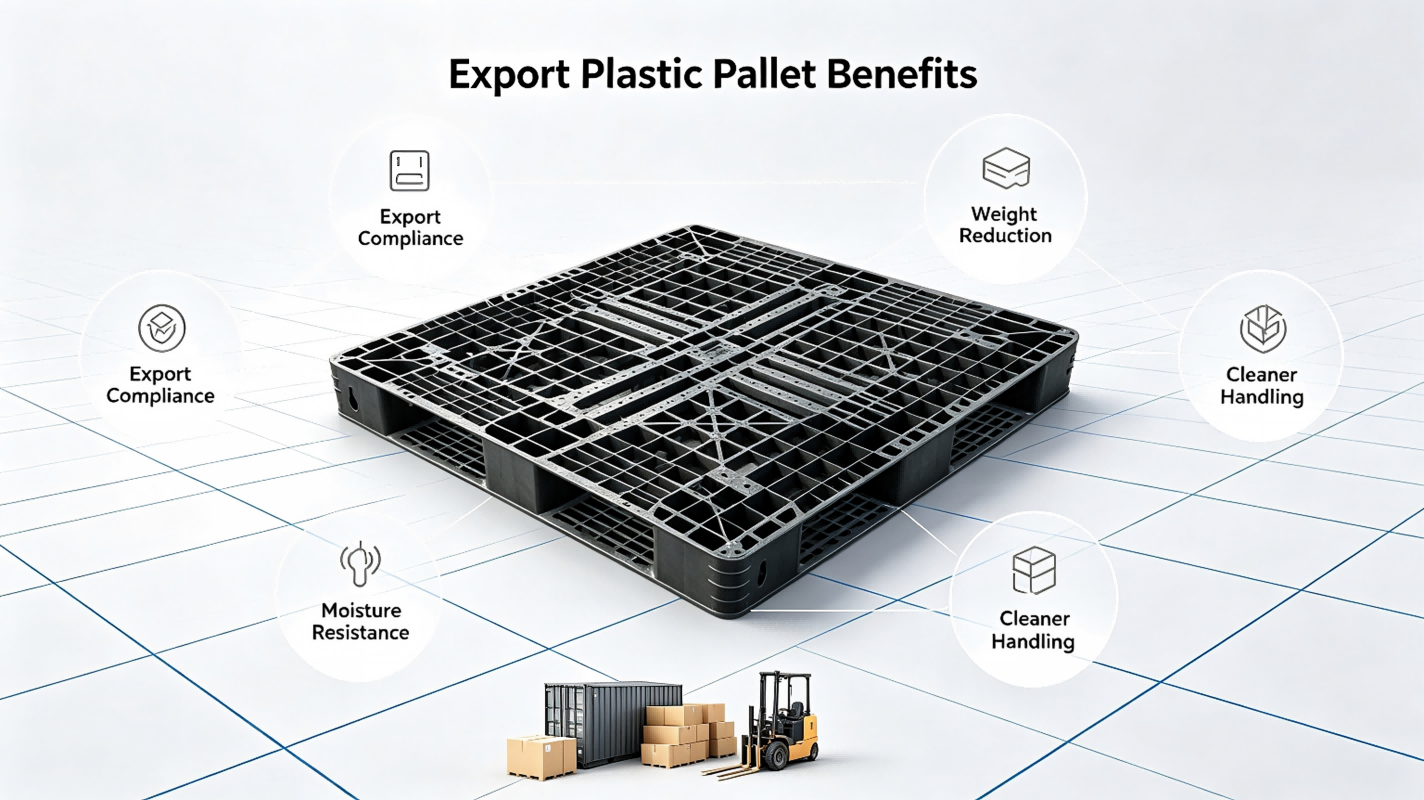
The strongest benefits are not limited to avoiding wood treatment. Exporters can also gain from lower weight, better moisture resistance, cleaner handling, and more efficient empty-pallet storage.
For many international shipments, these advantages can improve the overall logistics process rather than simply replacing one pallet material with another.
Compliance and Logistics Efficiency
A plastic pallet can remove one common concern associated with solid wood packaging: wood-treatment requirements.
This is especially useful when shipments are sent to markets where plant-health controls are strict. Instead of arranging treatment for wooden pallets, exporters can use a pallet material that does not rely on wood treatment.
The benefit is mainly operational. Fewer preparation steps can mean less coordination between the exporter, pallet supplier, freight forwarder, and warehouse.
Freight Considerations
Pallet weight should be included when calculating shipping costs.
I usually recommend calculating:
- Cargo weight
- Packaging weight
- Pallet weight
- Total shipment weight
- Number of pallets per shipment
This gives the buyer a more realistic comparison between pallet options.
The lightest pallet is not automatically the best pallet. If the pallet is too light for the cargo or handling conditions, the resulting damage risk can outweigh the weight saving.
Cargo Protection
Export cargo can experience vibration, impacts, moisture, and repeated handling.
A plastic pallet provides a stable platform for the load. Its smooth surface avoids common problems associated with splinters and exposed nails.
For buyers, the important question is not simply whether plastic is better than wood. The better question is whether the selected plastic pallet has enough structural performance for the actual cargo and handling process.
Hygiene
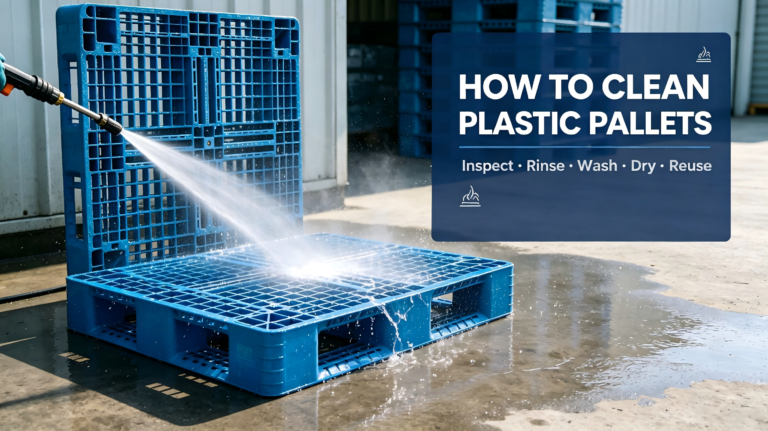
Plastic surfaces are generally easier to clean than porous wooden surfaces.
This makes plastic pallets attractive for applications where cleanliness matters. Food, pharmaceutical, and other sensitive products can benefit from a pallet that is easy to wash and maintain.
However, buyers should distinguish between a general plastic pallet and a pallet specifically selected for a regulated application. Material, design, cleaning requirements, and applicable standards should all be confirmed before purchase.
How Should You Choose an Export Plastic Pallet?
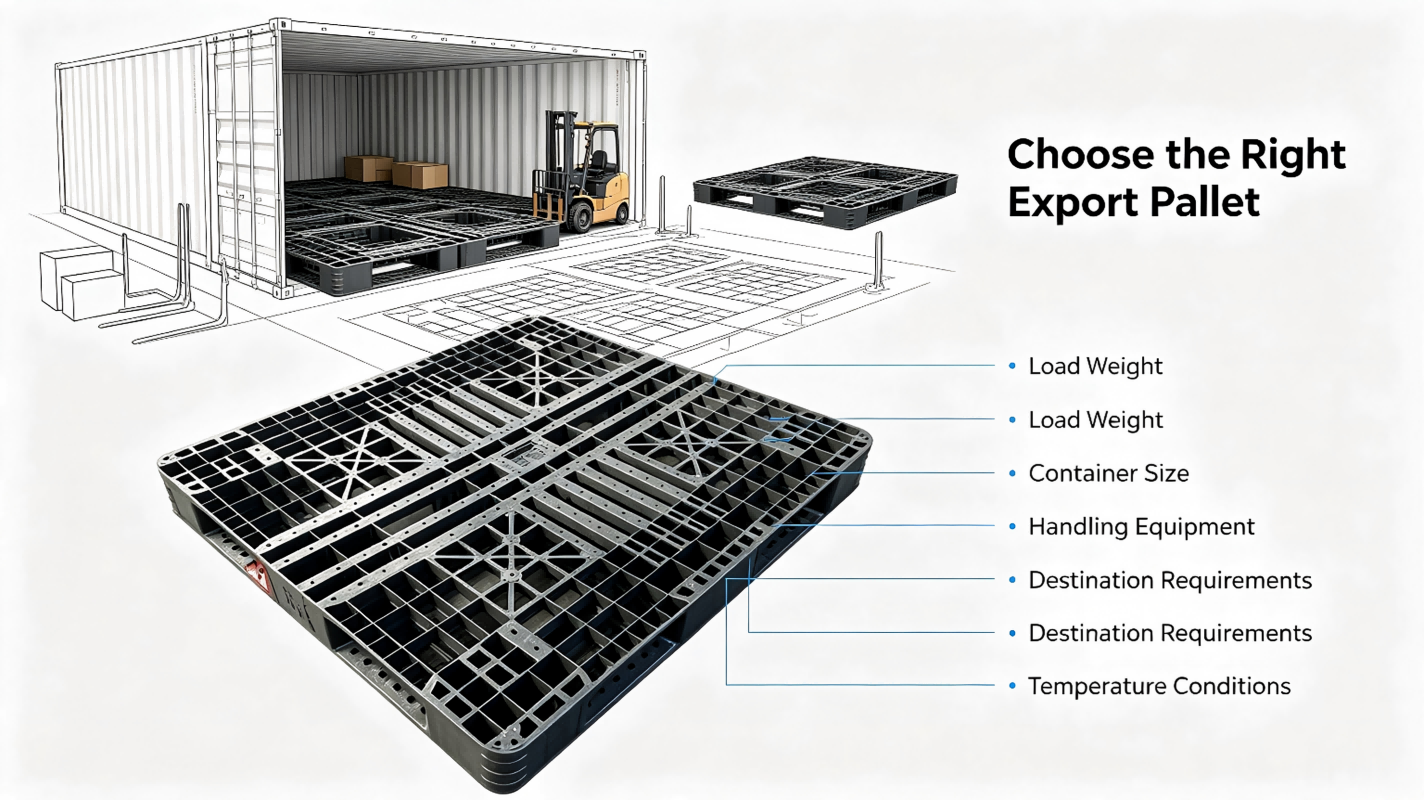
Choosing an export plastic pallet by price alone is one of the easiest ways to create problems later. Load weight, equipment, pallet size, destination, and temperature should be checked first.
The correct pallet should match the actual shipment rather than simply being the cheapest export model available.
1. Start With the Load Weight
First calculate the total weight of one loaded pallet, including the product and packaging.
Then compare that weight with the pallet's confirmed dynamic load capacity.
This distinction is important because static and dynamic capacities describe different situations.
- Static load: The pallet remains stationary on a suitable flat surface.
- Dynamic load: The pallet is moved or lifted during handling.
- Racking load: The pallet is supported by a racking system, if applicable.
A pallet that supports a heavy load while stationary may not be suitable for moving that same load with a forklift.
For a more detailed explanation of pallet load ratings, see our guide to plastic pallet load capacity.
I would always provide the supplier with the actual loaded pallet weight and handling conditions before ordering.
2. Check the Handling Equipment
The pallet should also match the equipment used at the destination.
Confirm whether the customer uses:
- Forklifts
- Electric forklifts
- Manual pallet trucks
- Automated handling equipment
A four-way-entry pallet can provide more flexibility for forklift access. However, equipment compatibility should still be confirmed for the specific pallet design.
3. Match the Pallet Size to the Destination
Pallet dimensions should be selected together with the container and destination market.
Common dimensions discussed for export applications include:
| Market or application | Common pallet size |
|---|---|
| North American shipments | 48 × 40 in. / approximately 1219 × 1016 mm |
| European shipments | 1200 × 800 mm |
| Some Asian markets | 1100 × 1100 mm |
The actual preferred size depends on the customer's warehouse, loading equipment, cargo dimensions, and container arrangement.
Do not assume that a pallet that fits one market will automatically provide the best loading efficiency in another.
4. Consider Temperature
Temperature is another important factor for export shipments.
If the cargo is frozen or will travel through very cold regions, ask the manufacturer about the material and its low-temperature performance.
Some recycled materials can become more brittle at low temperatures. For cold-chain applications, material selection should therefore be discussed before production rather than after the pallets arrive.
What Export Plastic Pallet Sizes and Product Options Are Available?
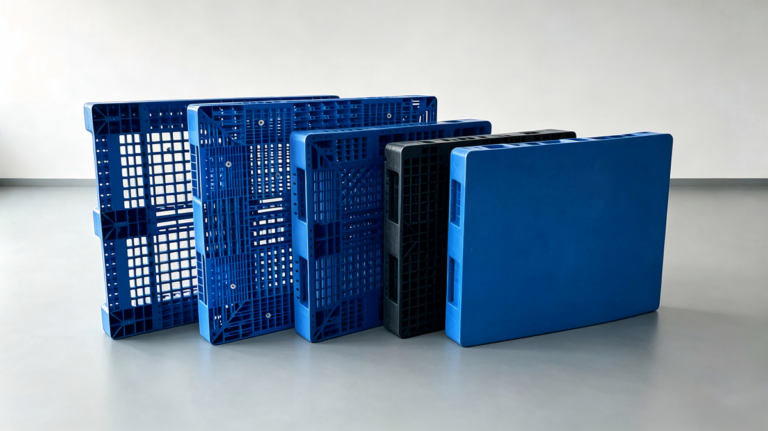
There is no single export pallet size that works for every international shipment. Buyers should select the size and structure according to the destination market, cargo, container, and handling equipment.
The most important specification is the confirmed specification of the actual pallet being purchased.

Common Export Sizes
Several pallet footprints are commonly considered for international shipping:
- 48 × 40 in. for North American applications
- 1200 × 1000 mm for applications requiring a larger rectangular footprint
- 1200 × 800 mm for European applications
- 1100 × 1100 mm for some Asian applications
The dimensions should be checked against the customer's storage and handling system before ordering.
For a practical comparison of pallet arrangements and container loading, see our guide on how many pallets fit in a container.
One-Way Export Pallets
A one-way plastic pallet is designed around a simple logistics objective: transport the goods to the destination without requiring the pallet to return to the original shipper.
This makes lightweight and nestable designs particularly attractive when the pallet has little or no return value after delivery.
For these applications, the buyer should prioritize:
- Appropriate load capacity
- Correct pallet dimensions
- Low pallet weight
- Nestability where useful
- Forklift compatibility
- Material suitability
- Destination requirements
For exporters looking for a specific nestable solution, our 1200 × 800 mm nestable export plastic pallet is one example of a one-way export pallet design.
Do Not Confuse One-Way and Heavy-Duty Pallets
A heavy-duty reusable pallet and a one-way export pallet serve different purposes.
If a pallet will remain inside a closed-loop supply chain and be reused repeatedly, a more durable design may justify its higher purchase cost.
If the pallet is primarily used to deliver goods to an overseas customer and will not return, a lighter export-oriented design may provide better economic logic.
The best option depends on the complete logistics cycle.
What Export Shipping Scenarios Are Plastic Pallets Suitable For?
The same export pallet may not be ideal for every transportation method. The shipping route, cargo weight, equipment, and space constraints should determine the final selection.
A good export pallet should fit the actual logistics scenario rather than being selected only because it is commonly used.
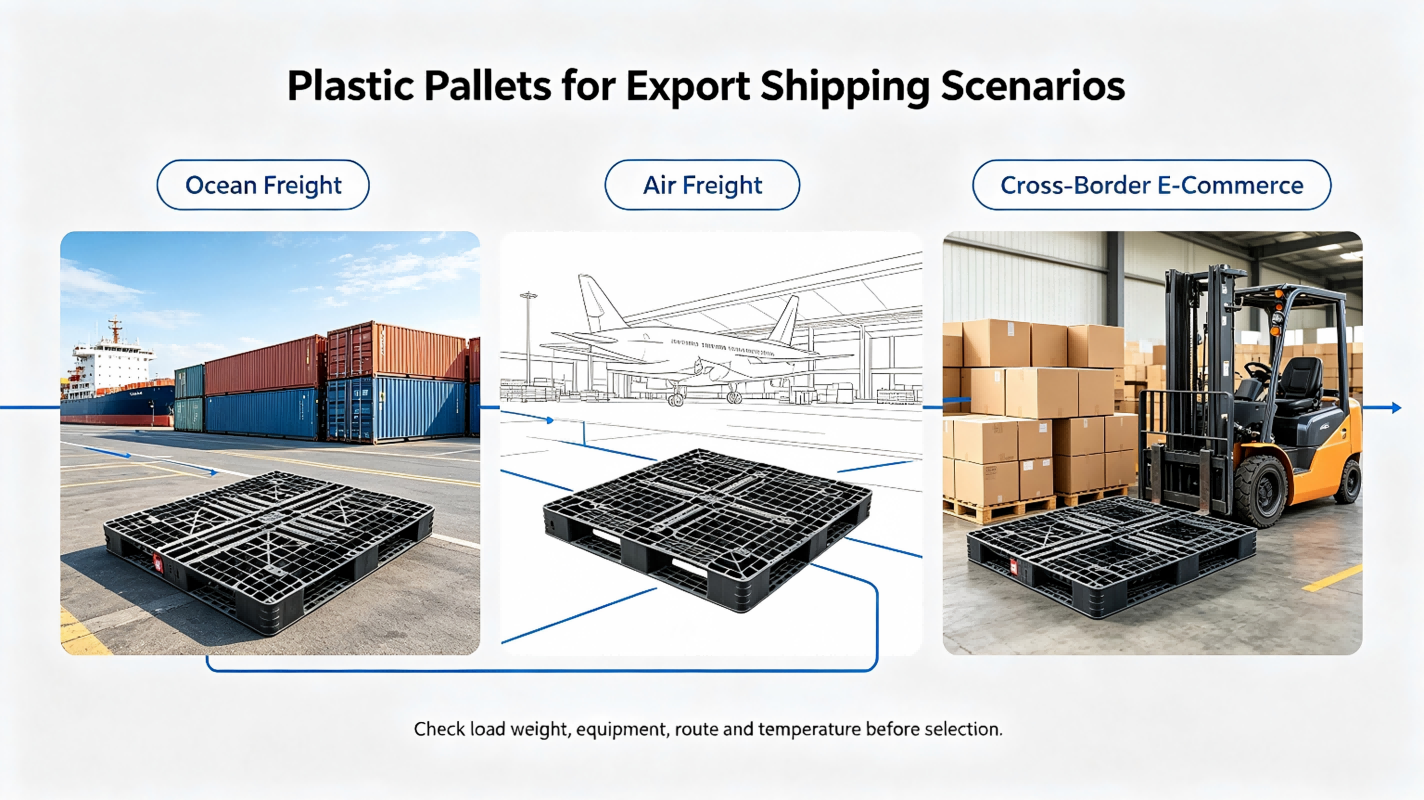
Full-Container Ocean Shipping
For full-container shipments, pallet dimensions and container utilization are important.
Before purchasing, calculate how the selected pallet footprint will be arranged inside the 20-foot or 40-foot container. A pallet that leaves large unused areas can reduce loading efficiency.
Nestable empty pallets can also reduce storage space before loading.
Less-than-Container Load Shipments
For consolidated shipments, cargo may be handled more frequently before reaching the final destination.
In this situation, pallet stability and resistance to handling impacts become important.
The pallet should be selected according to the loaded weight and the handling equipment used during transfer.
Air Freight
Air freight makes pallet weight especially important.
When the pallet itself represents a meaningful part of the shipment weight, a lightweight export pallet can help reduce unnecessary tare weight.
However, weight reduction should not come at the expense of adequate load performance.
Cross-Border and E-Commerce Shipping
Cross-border shipments can involve multiple handling points.
The pallet therefore needs to support the cargo through loading, unloading, warehouse staging, and transportation.
For smaller or frequent export shipments, standard pallet dimensions can also simplify purchasing and warehouse planning.
Frequently Asked Questions
Export pallet buyers often have similar questions about customs, load capacity, dimensions, and material selection. The following points cover the most important checks before purchase.
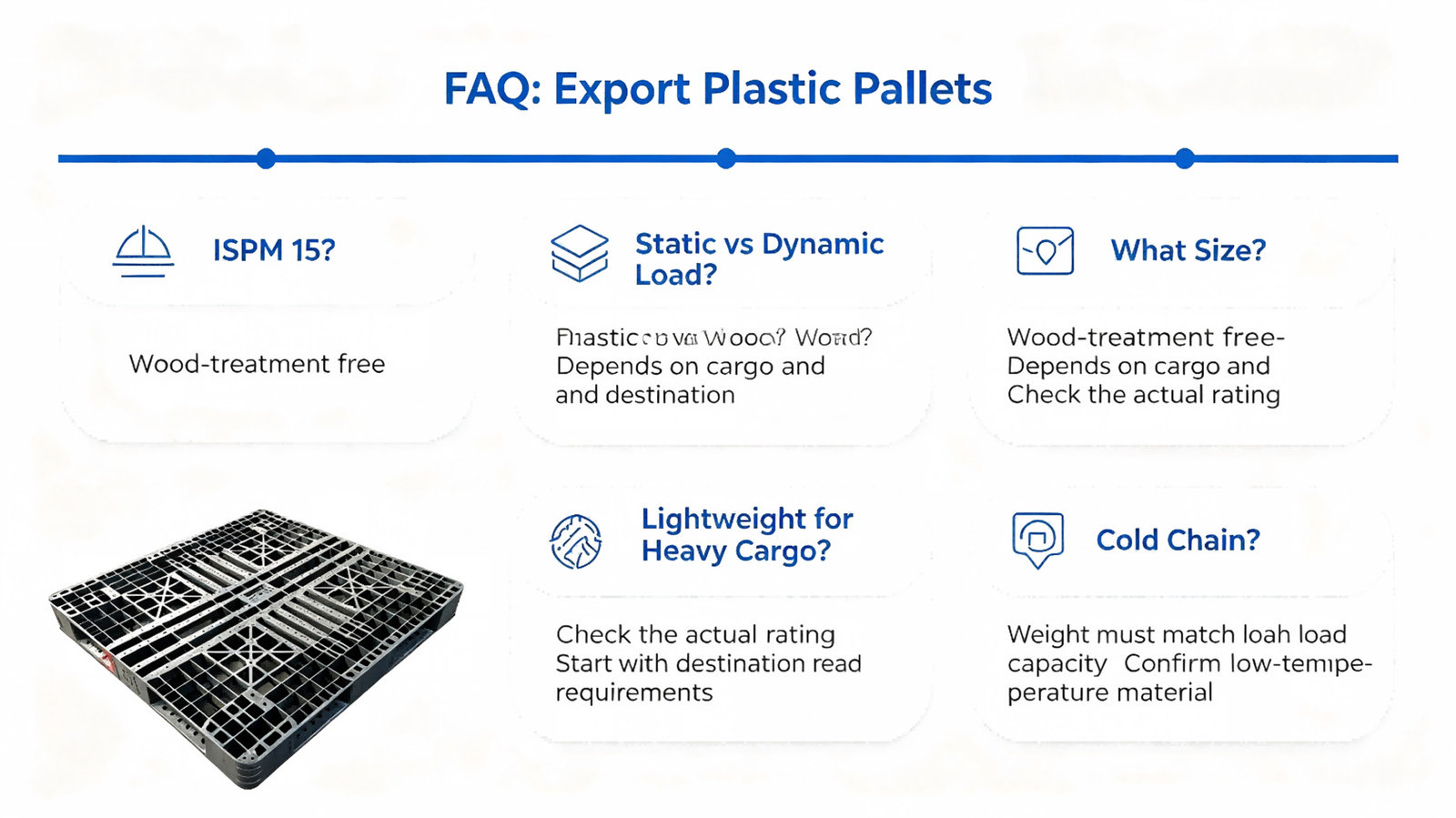
Do plastic pallets require ISPM 15 treatment?
Plastic pallets do not use solid wood and therefore avoid the wood-treatment issue associated with ISPM 15-regulated solid wood packaging. However, destination-specific import and shipping requirements should still be confirmed.
Are plastic pallets better than wooden pallets for export shipping?
Plastic pallets can offer advantages in export shipping, including resistance to moisture, lower weight, easier cleaning, and avoiding wood-treatment requirements. The better choice depends on cargo weight, budget, destination, and handling conditions.
For a more detailed comparison, see our guide to plastic vs. wooden pallets.
What is the difference between static and dynamic pallet capacity?
Static capacity refers to the load supported while the pallet remains stationary. Dynamic capacity applies when the pallet is being moved or lifted. Always compare the correct rating with your actual handling conditions.
What size plastic pallet should I use for export?
Start with the destination market and customer's warehouse requirements. Common export footprints include 48 × 40 inches, 1200 × 800 mm, 1200 × 1000 mm, and 1100 × 1100 mm. Container loading should also be checked before final selection.
Are lightweight plastic pallets suitable for heavy cargo?
Not automatically. A lightweight pallet must still have sufficient confirmed load capacity for the actual cargo and handling conditions. Provide the manufacturer with the loaded pallet weight before ordering.
Are plastic pallets suitable for cold-chain exports?
They can be considered for cold-chain applications, but material selection is important. If the shipment will experience low temperatures, confirm the pallet's low-temperature performance with the manufacturer before purchase.
Export Plastic Pallet Service and Customization
Standard export pallets are useful for common shipping requirements, but some buyers need different dimensions, materials, structures, or load capacities.
For these projects, working directly with a plastic pallet manufacturer can make it easier to match the pallet with the actual logistics process.
Euro Plastic Pallet provides standard and customized plastic pallet solutions for B2B buyers, distributors, wholesalers, logistics companies, brands, and industrial users.
Customization can include:
- Custom pallet sizes
- Custom colors
- Custom logos
- Custom molds
- Material selection
- Structural customization
- Load capacity customization
If your export project requires a non-standard footprint, structure, material, or load rating, you can learn more about our custom plastic pallet manufacturing service.
For an export project, I recommend providing the manufacturer with the most important application information first:
- Destination market
- Cargo type
- Loaded pallet weight
- Shipping method
- Handling equipment
- Required pallet dimensions
- Temperature conditions
- Whether the pallet is one-way or reusable
This information gives the manufacturer a much better basis for recommending or customizing the pallet.
Get the Right Plastic Pallet for Your Export Shipment
The right export pallet is not simply the cheapest pallet. It should match your cargo weight, shipping method, destination, handling equipment, and space requirements.
If you are comparing one-way plastic pallets for an upcoming shipment, contact Euro Plastic Pallet and confirm the appropriate size, structure, material, and load capacity before placing a bulk order.
My Role
For years, I have assisted food, pharmaceutical and dairy manufacturers in finding suitable ISPM15‑free plastic pallets as alternatives to wooden pallets to guarantee product quality. These fumigation‑free plastic pallet solutions help customers save time, cut costs and boost supply‑chain efficiency. Drawing on my industry experience, I also advise clients on pallet‑related details to further optimize their logistics operations.
About Euro Plastic Pallet
Euro Plastic Pallet is a plastic pallet manufacturer with over 20 years of production experience, headquartered in China. We provide high-quality, customized plastic pallet solutions for brand owners, wholesalers, and distributors.
With 60+ injection/rotational molding machines, each staffed with quality control[^12] personnel having 5+ years of experience, we ensure consistent product quality.
Services
- Products: Complete plastic pallet solutions
- Customization: Custom colors, logos, and molds
- International Certifications: ISO 9001, CE, REACH, ROHS, SGS, FDA, GRS
Quality Assurance
- Raw Material Testing: Complies with RoHS, REACH standards, meeting international strength and performance requirements
- Precision Manufacturing: Automated injection molding, precision assembly, accuracy ±0.1mm
- Comprehensive Inspection: 100% factory testing, ISO 9001 sampling protocols ensuring high standards
- Certifications: ISO 9001, CE, REACH, ROHS, SGS, FDA standards compliance
Production Capacity
- High-Quality Manufacturing: 60+ injection/rotational molding machines following ISO 9001
- Premium Customization: Customized solutions for global brands
- Flexible Solutions: Customer-specific customization[^17] enhancing market competitiveness
Global Impact
Serving global customers with reliable plastic pallets[^1] and customized logistics packaging solutions[^18], supporting business growth and customer trust.